
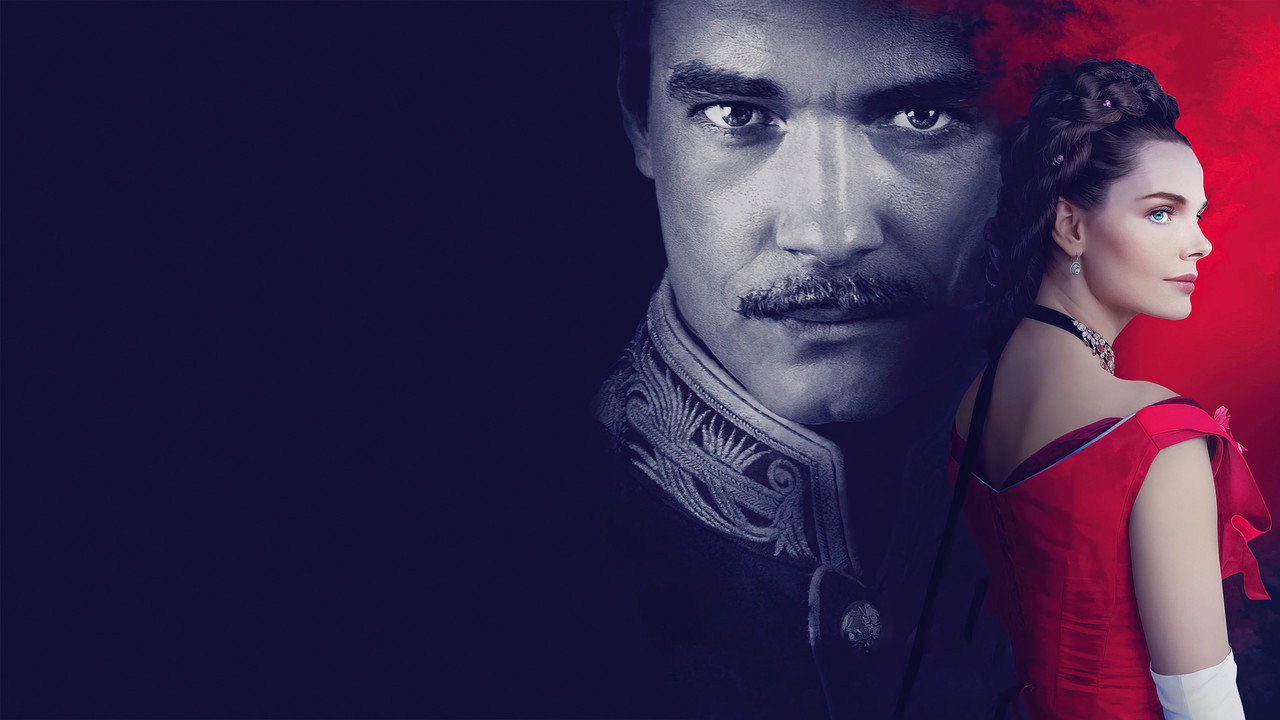
Anna Karenina. Vronsky's Story (2017)
There is no single truth in love. Each treads their own path. Which should take precedence – passion or duty? How do we choose? And who gets to judge? These are the eternal questions, remorselessly thrust upon us by life. Anna Karenina made her choice, leaving her son Sergei to grow up struggling to understand why his mother took such a tragic and terrible path, and Count Vronsky haunted by the memory of the woman for whose death he still blames himself 30 years later. In 1904, in the aftermath of one of the battles of the Russo-Japanese war, Sergei Karenin and Alexei Vronsky find themselves thrown together in a remote Manchurian village, where fate offers them a chance to return to the events long past and, finally, to find the answers both have long been seeking.
What people think about Anna Karenina. Vronsky's Story
What makes Anna Karenina. Vronsky’s Story feel newly alive is its daring shift in perspective: instead of replaying a familiar tragedy, it listens to the echo it left behind, asking what love, duty, and guilt look like decades later when the romance has hardened into memory. Set against the stark chill of the Russo-Japanese War, the film carries a sweeping, old-world authenticity—lavish costumes, meticulous art direction, and painterly cinematography that makes every frame feel hand-composed. The performances anchor all that beauty with real ache, letting regret and longing seep in quietly rather than shouting for tears. If you’re expecting a brisk, plot-driven melodrama, it may feel deliberate, but if you want a visually sumptuous, emotionally grown-up revisit to a classic, it’s deeply worth your time.
Anna Karenina. Vronsky’s Story is clearly trying to reframe Tolstoy’s tragedy as a reflective, war-scarred reckoning between Vronsky and Anna’s son, mixing romance with guilt and duty. The problem is it often plays more like a heavy, slow march than an emotional revelation, with characters that feel sketched in and a central relationship that doesn’t consistently spark, making the big feelings land softer than they should. If you’re coming for the novel’s nuance, psychological complexity, or sweeping romantic pull, you may find this version oddly flat and a bit self-important. Still, if you’re patient with deliberate pacing and want a somber, regret-tinged companion piece rather than a definitive Anna Karenina adaptation, there’s enough atmosphere and thematic ambition to justify a look.
Cast
 Elizaveta BoyarskayaAnna Karenina
 Maksim MatveevAleksey Vronskiy
 Vitaly KishchenkoKarenin
 Kirill GrebenshchikovSergey Karenin
 Tatyana LyutaevaCountess Vronskaya
 Anastasiya MakeevaBetsi Tverskaya
 Ivan KolesnikovStepan Arkadievich Oblonskiy
 Alfiya Zakirova
 Dmitriy Gusev
  Anna Sinyakina
 Yuri Belyayev
 Natalia Vinokurova
 Svetlana Amanova
 Nataliya Koloskova
 Stanislav Eventov
 Aleksandr Gokh
- KKatarina Pogorelova
 Artem Mishukov
Crew
- Director
- Karen Shakhnazarov
- Music
- Yuriy Poteenko
- Cinematography
- Alexandr Kuznetsov
- Editing
- Irina Kozhemyakina
Details
- Released
- June 8, 2017
- Language
- Russian
- Studio
- Mosfilm
- IMDb
- tt6966538