
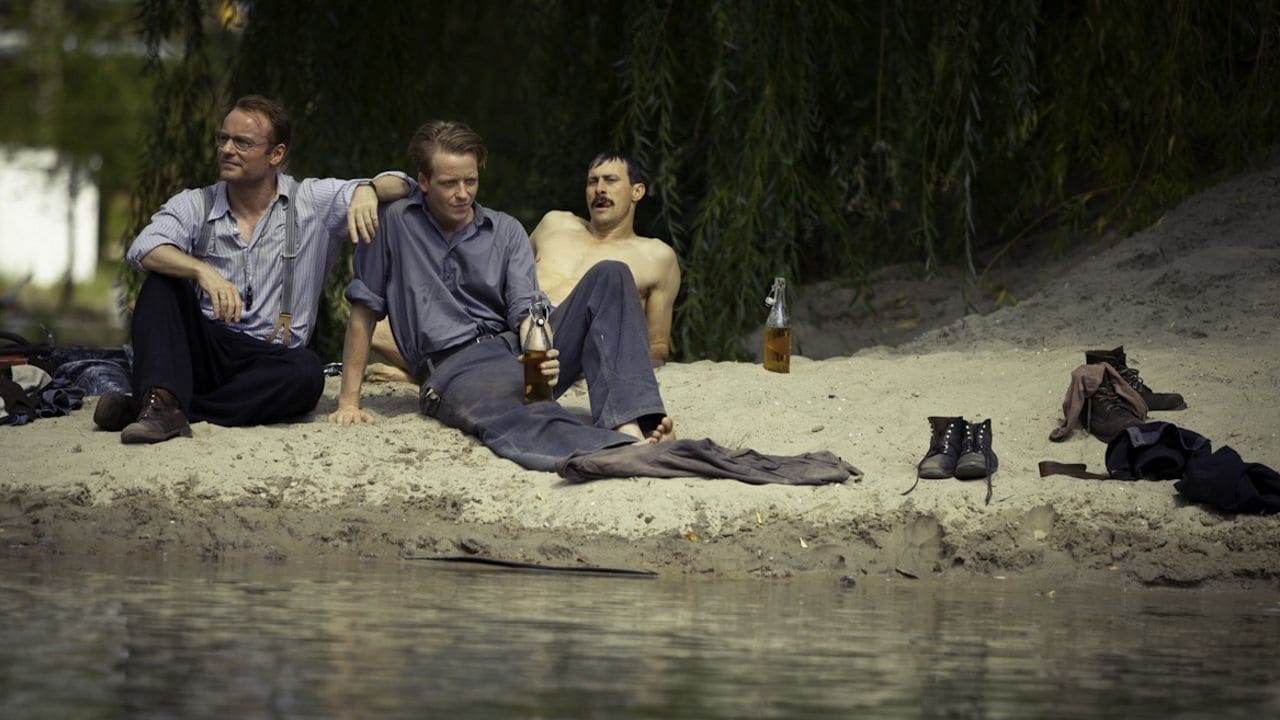
My Good Hans (2015)
It is a story about the Soviet worker Pyotr and the German engineer Hans, who came to the USSR before the war on a business trip. At a Soviet plant the German team works in cooperation with Russian specialists. Once Hans makes a mistake which causes the explosion of the furnace and human losses. Hans finds himself at the mercy of Pyotr, the only witness to his actions near the furnace. Pyotr also depends on Hans, because Pyotr’s very presence near the furnace entails accusation of subversive actions and a death sentence. Mutual suspicion gives way to silent sympathy and later friendship. They even look like each other, both have small children. Pyotr secretly leaves the town with his family but Hans feels loss rather that relief at the disappearance of the embarrassing witness.
What people think about My Good Hans
My Good Hans is special because it finds a quiet, devastating human story in the machinery of history, where a single accident can turn ordinary men into enemies—and then into something far more complicated. Set in the uneasy calm before war, it plays like a pressure cooker drama: spare, tense, and emotionally precise, with every glance and pause carrying the weight of what can’t be safely said. The film’s power comes from its psychological depth and uncompromising mood, letting suspicion soften into a fragile bond without ever romanticizing the era or reaching for easy sentiment. It’s not a crowd-pleaser if you want fast pacing or clear heroes, but if you’re drawn to intimate, morally charged cinema that lingers in the mind, this one feels like a future classic.
My Good Hans wants to be a tense, humane wartime drama about two men trapped by suspicion, guilt, and politics, with a slow-burn bond forming in the middle of a potential catastrophe. The problem is it often mistakes heaviness for depth: the symbolism can feel pretentious, the storytelling oddly opaque, and the pacing drags when it should be tightening the screws. Performances also lean big, which might read as passionate to some but will feel over-the-top if you prefer naturalistic drama. If you enjoy austere, meditative films and don’t mind ambiguity, there are moments of atmosphere and moral tension—but if you’re expecting a gripping, clear-eyed war romance, this may test your patience.
Cast





Crew
- Director
- Aleksandr Mindadze
- Writers
- Aleksandr Mindadze
- Music
- Valeriy Siver
- Cinematography
- Oleg Mutu
- Editing
- Daria Danilova
Details
- Released
- October 7, 2015
- Language
- Russian
- Studio
- Sota Cinema Group, ma.ja.de. Fiction, Passenger Pictures Studio
- IMDb
- tt3817188