
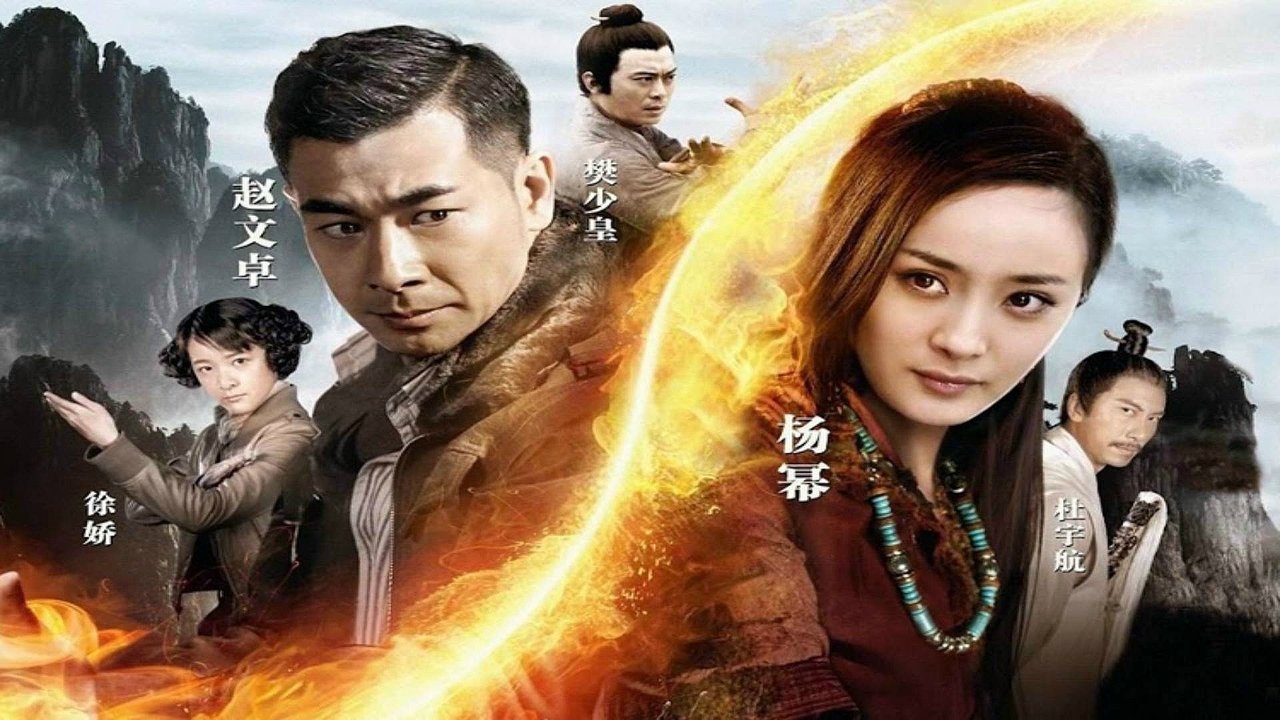
Wu Dang (2012)
In early Republican China, rumors were going around about the treasure in Wudang Mountain. An American conspirator took his well-trained kung fu daughter to Wudang by sponsoring a Taoist martial arts competition, to steal the treasure. Out of expectation, a disciple represented Wudang to compete with other martial arts masters for the championship. During the competition, resentment incurred against different parties, the relationship became complicated, a Korean female Tai Chi descendant fell in love with the American conspirator and the secret of the treasure had been revealed. The treasure is the key of the magnetic field of Wudang, if it's stolen, Wudang would be devastated. To protect Wudang, a group of young heroes rallied around to defeat grant masters. It's the time the long-lost Wudang martial arts returned
What people think about Wu Dang
Wu Dang feels like a love letter to the era when martial-arts movies weren’t afraid to be sweeping, romantic, and delightfully larger than life, with old-school wire-fu that turns every fight into a kind of airborne ballet. Set against the mystique of Wudang Mountain, it carries that pulpy, early-Republican intrigue vibe—secret agendas, rival schools, and young heroes finding their spine—without ever losing its sense of fun. The choreography is the main event, but the film earns its momentum with solid performances and a surprisingly warm-hearted spirit that makes you want to root for the team protecting something bigger than themselves. If you’re looking for gritty realism, this isn’t it; if you miss the glossy, entertaining 90s-style kung fu adventure that plays like a Saturday-night crowd-pleaser, it’s an easy yes.
Wu Dang wants to be a glossy, globe-trotting martial-arts adventure with mythic stakes, tournament spectacle, and a “protect the sacred mountain” vibe. The problem is the screenplay is a mess: motivations flip, subplots pop up and go nowhere, and the treasure/magnetic-field hook is so nonsensical it’s hard to take the danger seriously. The action has its moments, but it’s constantly undercut by choppy storytelling and CGI that looks more like a rushed TV effect than a cinematic payoff. If you’re here for coherent plotting or emotional investment, skip it; if you can treat it as a lightweight, occasionally decent fight reel wrapped in chaos, you might tolerate it.
Cast







Crew
- Director
- Patrick Leung Pak-Kin
- Writers
- Chan Hon
- Producers
- Chan Hon
Details
- Released
- July 17, 2012
- Language
- Chinese
- Studio
- Xiao Xiang Film Group 潇湘电影集团, Mei Ah Media (Beijing), Mei Ah Films Production
- IMDb
- tt2251662