
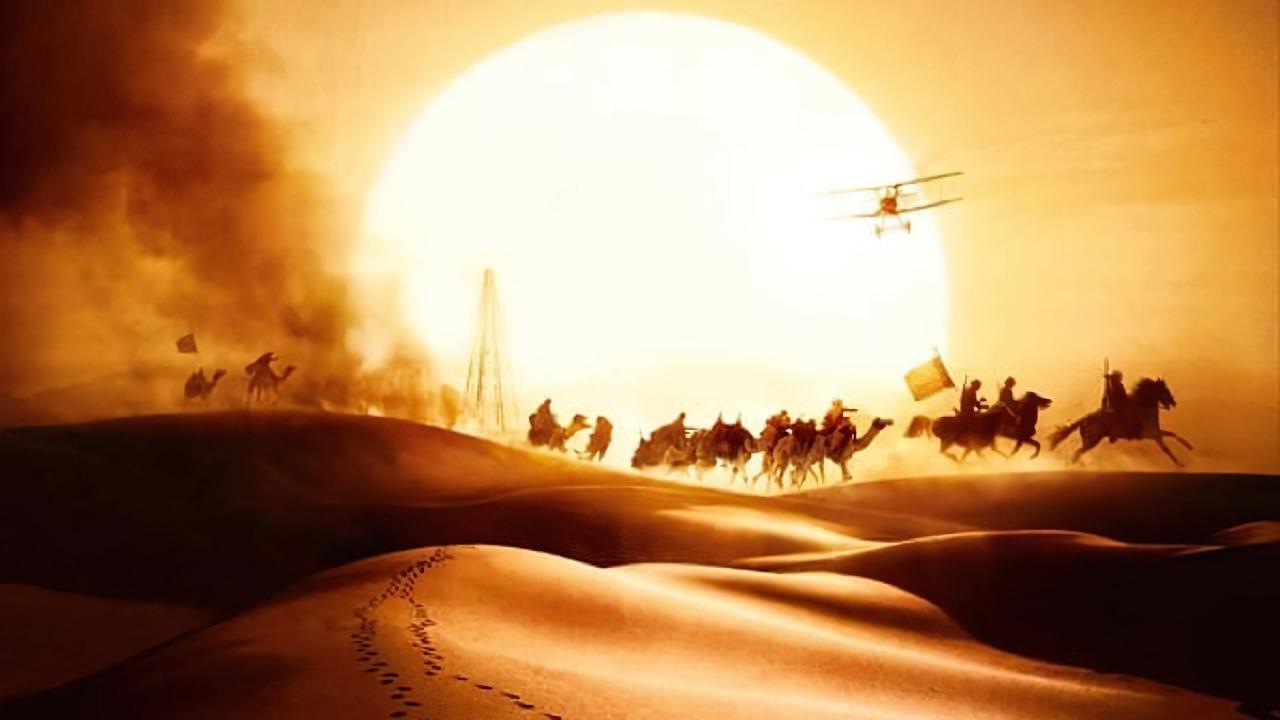
Black Gold (2011)
On the Arabian Peninsula in the 1930s, two warring leaders come face to face. The victorious Nesib, Emir of Hobeika, lays down his peace terms to rival Amar, Sultan of Salmaah. The two men agree that neither can lay claim to the area of no man’s land between them called The Yellow Belt. In return, Nesib adopts Amar’s two boys Saleeh and Auda as a guarantee against invasion. Twelve years later, Saleeh and Auda have grown into young men. Saleeh, the warrior, itches to escape his gilded cage and return to his father’s land. Auda cares only for books and the pursuit of knowledge. One day, their adopted father Nesib is visited by an American from Texas. He tells the Emir that his land is blessed with oil and promises him riches beyond his wildest imagination. Nesib imagines a realm of infinite possibility, a kingdom with roads, schools and hospitals all paid for by the black gold beneath the barren sand. There is only one problem. The precious oil is located in the Yellow Belt.
What people think about Black Gold
Black Gold is the kind of old-fashioned, big-screen epic that still feels rare: a sweeping desert saga where the dunes look endless, the politics feel intimate, and every decision carries the weight of history. Jean-Jacques Annaud stages the Arabian Peninsula on the cusp of the oil age with muscular craftsmanship—thundering rides, tense councils, and battles that land with real impact—while letting the story breathe in the heat and silence between conflicts. Antonio Banderas and Mark Strong give the rival rulers a grounded gravitas, and the film’s allure lies in watching tradition and modernity collide not as slogans, but as lived choices under pressure. It’s not a quiet chamber drama and it does include moderate violence and a brief sexual moment, but if you’re in the mood for a handsome, ambitious adventure-drama with genuine scale and a strong sense of place, this one earns your time.
Black Gold is clearly aiming for an old-school desert epic about tradition colliding with modernity at the dawn of the oil era, with big themes of loyalty, identity, and foreign influence. The problem is it often plays like a prestige production that forgot to be gripping: the pacing is heavy, the dialogue can feel stiff and expositional, and some of the central performances don’t fully sell the cultural specificity the story demands. If you’re hoping for a tight political thriller or a rousing adventure with momentum, this will likely feel long and oddly lifeless despite the high stakes. Still, the sweeping locations, handsome production values, and the basic moral dilemma around “progress at a price” may work for you if you’re patient and mainly want atmosphere over spark.
Cast
 Mark StrongSultan Amar
 Antonio BanderasEmir Nesib
 Freida PintoLeyla
 Tahar RahimAuda
 Riz AhmedAli
 Lotfi DziriSheikh of Bani Sirri
 Liya KebedeAicha
 Corey JohnsonThurkettle
 Akin GaziSaleh
 Ériq EbouaneyHassan Dakhil
 Ramzy Lehner
- TTaoufik AyebSergeant Talib
 Driss RoukheMagrouf
 Hichem RostomNesibi Colonel
 Jan UddinIbn Idriss
- MMostafa GaafarKhoz Ahmed
Crew
- Director
- Jean-Jacques Annaud
- Writers
- Menno Meyjes
- Producers
- Xavier CastanoTarak Ben Ammar
- Music
- James Horner
- Cinematography
- Jean-Marie Dreujou
- Editing
- Hervé Schneid
Details
- Released
- December 21, 2011
- Language
- English
- Studio
- France 2 Cinéma, Quinta Communications, Carthago Films
- IMDb
- tt1701210