
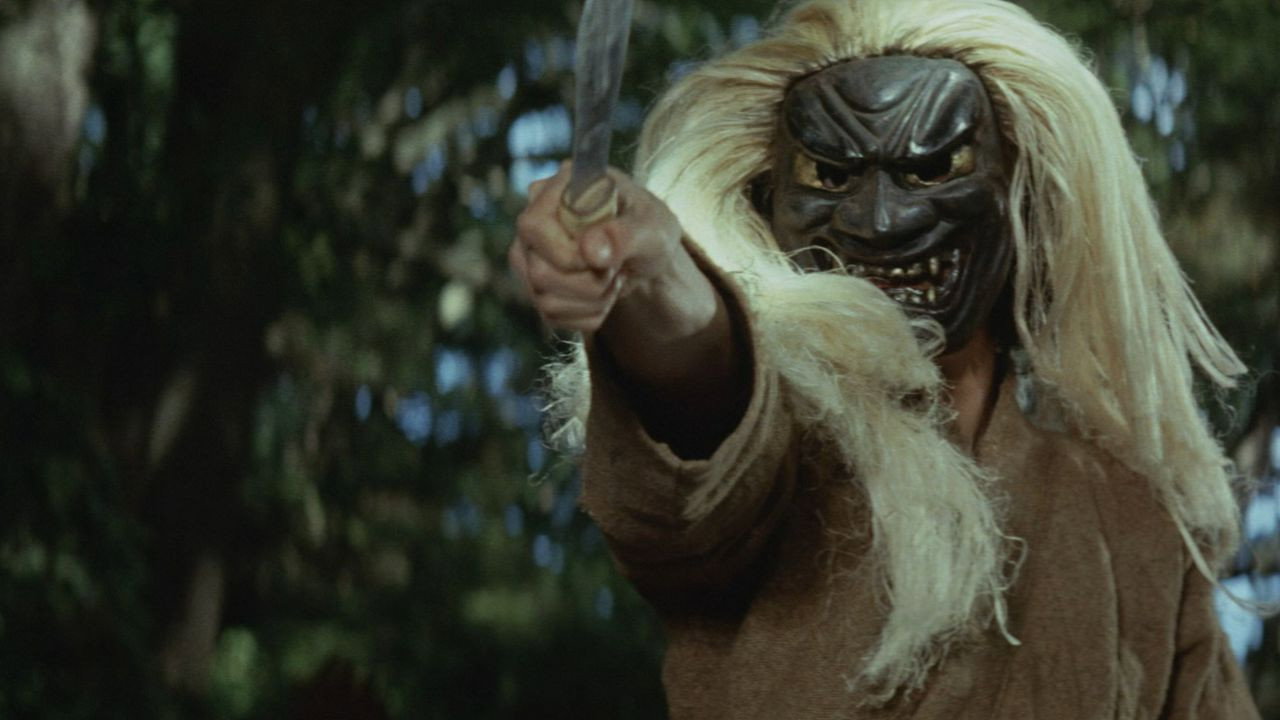
Demon Spies (1974)
Deep in the mountains of feudal Japan, a group of children endure cruel and unorthodox training in order to become the Shogunate's most secret and deadly weapons - the Demon Spies! Their true identities are hidden - even from each other. Behind their demon masks, they are educated in the deadly arts of infiltration, espionage, assassination - and seduction! If they survive to become strong enough to kill their teachers, they will become - the Demon Spies! Sent on a suicide mission to uncover a deadly conspiracy, five inexperienced Demon Spies must infiltrate a powerful fief, discover the location of its secret arsenal, and destroy it. But Lord Shogen, the Demon Hunter, plans to brutally interrogate, ingeniously torture, and cruelly execute - the Demon Spies!
What people think about Demon Spies
Demon Spies is the kind of 1970s genre lightning-in-a-bottle that doesn’t pretend to be polite: it’s feudal-Japan fantasy-action as vicious ninja pulp, where secrecy, survival, and brutality feel like they’re carved into the mountain air. The movie’s real hook is its delirious commitment to extremes—grim training, ruthless missions, and combat staged with a nasty, tactile energy that erupts into those infamous blood-gushing, borderline-surreal fountains. It’s visually arresting in that rough, exploitation-cinema way, more concerned with momentum and mayhem than tidy plotting, and that honesty becomes part of its charm. If you’re squeamish or want nuanced character drama, look elsewhere—but if you’re on the fence and craving ultraviolent, gory action with a feverish, masked-assassin vibe, this is a midnight-movie dare you’ll be glad you accepted.
Demon Spies (1974) is clearly aiming for a lurid, grindhouse blend of ninja-style action, espionage intrigue, and taboo shock value set in feudal Japan. The problem is the storytelling and direction don’t give any of it weight: the plot lurches from one “wouldn’t it be wild if…” idea to the next, characters are barely more than costumes, and the violence lands more as noise than tension. Most importantly, it leans into sexual violence in a way many viewers will find gratuitous and ugly rather than purposeful, so if you’re sensitive to that, this is an easy skip. If you can tolerate sleaze and want a time-capsule oddity with occasional pulpy set pieces and masked-mystique vibes, you might find some trash-cinema curiosity here—but don’t expect craft, coherence, or empathy.
Cast








Crew
- Director
- Takashi Tsuboshima
- Writers
- Ei OgawaTakato Ishikawa
- Music
- Masaru Satō
- Cinematography
- Yasushi Ichihara
- Editing
- Ume Takeda
Details
- Released
- February 9, 1974
- Language
- Japanese
- Studio
- TOHO, International Television Films
- IMDb
- tt0488850