

Casshern (2004)
Fifty years of war between the Great Eastern Federation and Europa - now merged as Eurasia - have taken their toll on planet Earth. As a result of the use of biological, chemical and nuclear weapons, much of Earth has become uninhabitable and people have become prey to new diseases. Professor Azuma's "neo-cell" project, which is supposed to be the answer to mankind's hardships, becomes a nightmare come true when mutants spawned from the experiment escape and declare war on the human race. Azuma's son Tetsuya, who was killed during the previous war, is reborn into the cyborg Casshern as mankind's last hope against the new mutant threat. This live-action sci-fi movie based on a 1973 Japanese animé of the same name.
What people think about Casshern
Casshern is the kind of sci-fi that swings for the heavens: a live-action anime fever dream painted in bold digital brushstrokes, where ruined landscapes and operatic battles feel less like “effects” and more like visions. Beneath the cyborg armor and mutant mythology, it carries a surprisingly mournful heart, lingering on the cost of war and the desperation that drives people to play god, so the spectacle comes with real weight. The vibe is grand, stylized, and occasionally chaotic—part dystopian nightmare, part tragic romance—yet it keeps finding moments of awe and bittersweet reflection amid the noise. It’s not for viewers who need tidy world-building or subtle visuals, but if you’re open to ambitious, emotionally charged sci-fi that looks like nothing else, Casshern is absolutely worth the plunge.
Casshern is clearly trying to be a grand, operatic sci-fi tragedy about war guilt, human experimentation, and whether “saving humanity” is just another form of violence, and you can feel the ambition in every frame. The problem is it often plays like a two-hour music video with a philosophy textbook taped to it: gorgeous, noisy, and emotionally heavy, but frequently hard to follow and oddly distant when it should hit hardest. If you need clean storytelling, clear character arcs, or a coherent ruleset for the world, this can feel exhausting and messy rather than epic. But if you’re patient with confusion and you mainly want bold visuals, striking production design, and a grim, fever-dream mood that’s more about vibes than plot precision, it has real cult appeal.
Cast
 Yūsuke IseyaTetsuya Azuma
 Kumiko AsoLuna Kozuki
 Akira TeraoDr. Kotaro Azuma
 Kanako HiguchiMidori Azuma
 Fumiyo KohinataDr. Kozuki
 Hiroyuki MiyasakoAkubon
 RyoSan Ikegami
 Tetsuji TamayamaSekiguchi
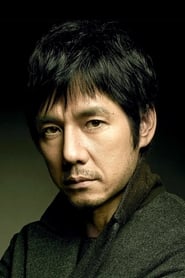 Hidetoshi NishijimaLieutenant Colonel Kamijo
 Gorō NayaNarrator
 Yōko MoriguchiLuna's mother
 Tatsuya MihashiDr. Furoi
 Mayu TsurutaBurai's wife
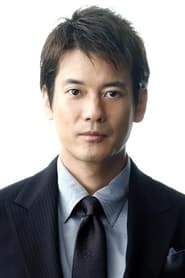 Toshiaki KarasawaBurai
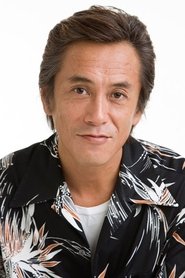 Susumu TerajimaSakamoto
 Mitsuhiro OikawaKaoru Naito
 Jun KanameBarashin
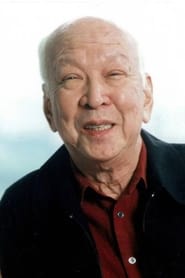 Hideji ŌtakiGeneral Kamijo
Crew
- Director
- Kazuaki Kiriya
- Music
- Shiro Sagisu
- Cinematography
- Kazuaki Kiriya
- Editing
- Kazuaki Kiriya
Details
- Released
- April 24, 2004
- Language
- Japanese
- Studio
- Tatsunoko Production
- IMDb
- tt0405821