
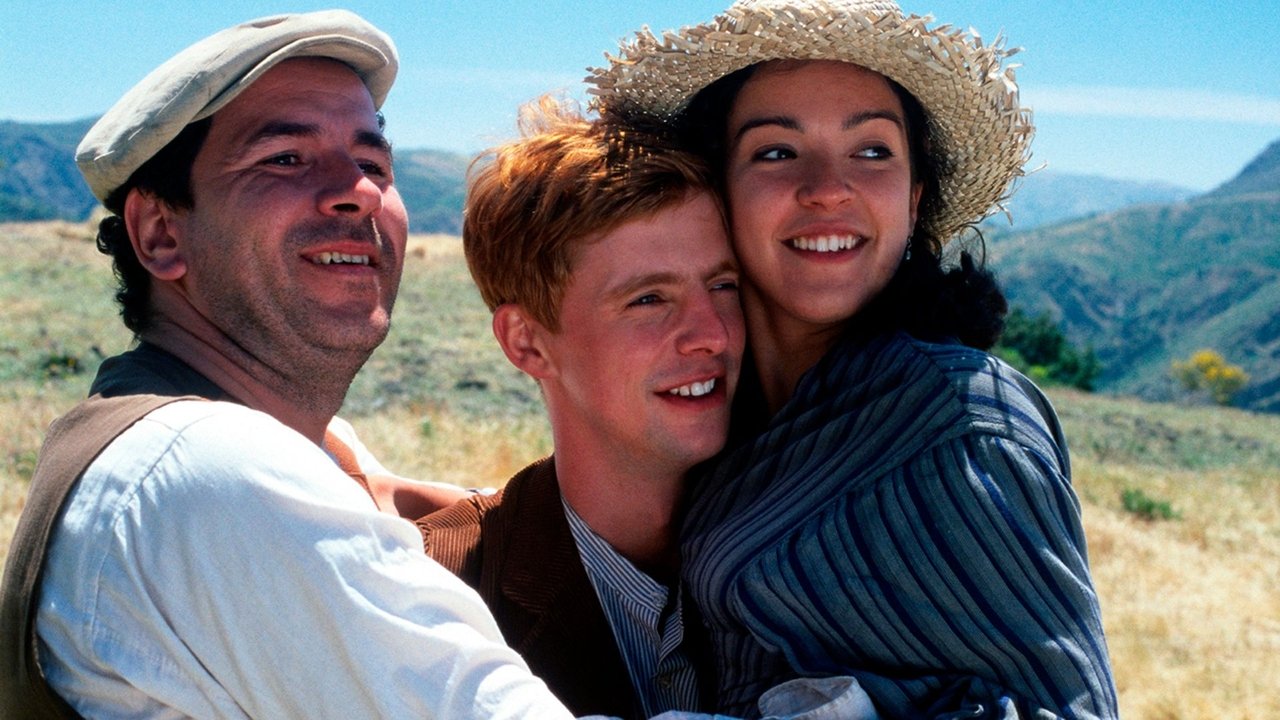
South from Granada (2003)
Brenan arrives at Yegen on foot, interrupting the funeral held for the daughter of the local cacique. He collapses from dysentery and soon learns that the local cacique, Don Fernando, is leaving for Granada with his wife. Brenan rents Fernando’s house for a year and soon enlists the services of María as housekeeper and cook and becomes friends with a local man named Paco. Brenan spends most of his time reading, walking, and trying to write poetry.His friends Dora Carrington, Lytton Strachey (who is ill), and Ralph Partridge visit for a couple of days. Brenan, who has been maintaining a correspondence with Carrington, learns during the visit that Partridge and Carrington are engaged. He is crushed, as he had been in love with Carrington.
What people think about South from Granada
South from Granada is the kind of literary romance that sneaks up on you: a sun-warmed, gently witty portrait of an English outsider (a quietly magnetic Matthew Goode) trying to turn a remote Andalusian village into a home, only to discover that real life is messier, funnier, and more heartbreaking than the poems in his head. Fernando Colomo keeps the tone breezy and inviting, letting the landscape, the village rhythms, and the prickly household dynamics do the storytelling, so the film plays like a lazy afternoon that gradually reveals sharp emotional edges. There’s an easygoing charm to the culture clash and the visiting bohemians, but it’s also honest about desire, jealousy, and loneliness—plus it includes moderate nudity that fits the earthy, unvarnished setting. If you’re expecting a sweeping, plot-heavy epic, this may feel lightweight; if you want something humane, romantic, and quietly entertaining, it’s an unexpectedly lovely trip.
South from Granada is aiming for a sun-drenched, literary mood piece about an English outsider drifting through rural Spain, with romance and gentle comedy doing more of the work than plot. The problem is it often feels lightweight for the material, skimming past the emotional consequences of its love triangle and culture-clash tensions instead of digging into them, so if you’re expecting real depth or a hard-hitting period drama, you may find it frustratingly slight. It’s also fairly casual about nudity and sexual situations, presented as part of the earthy atmosphere rather than as shock, but it’s frequent enough to be a deciding factor. If you can settle into a meandering, postcard-pretty film that’s more about vibes, scenery, and a melancholy aftertaste than narrative weight, there are pleasures here—just don’t go in expecting it to land with much gravity.
Cast








Crew
- Director
- Fernando Colomo
- Cinematography
- José Luis Alcaine
- Editing
- Antonio Lara
Details
- Released
- January 9, 2003
- Language
- Spanish
- Studio
- Fernando Colomo PC, Atresmedia
- IMDb
- tt0349076