
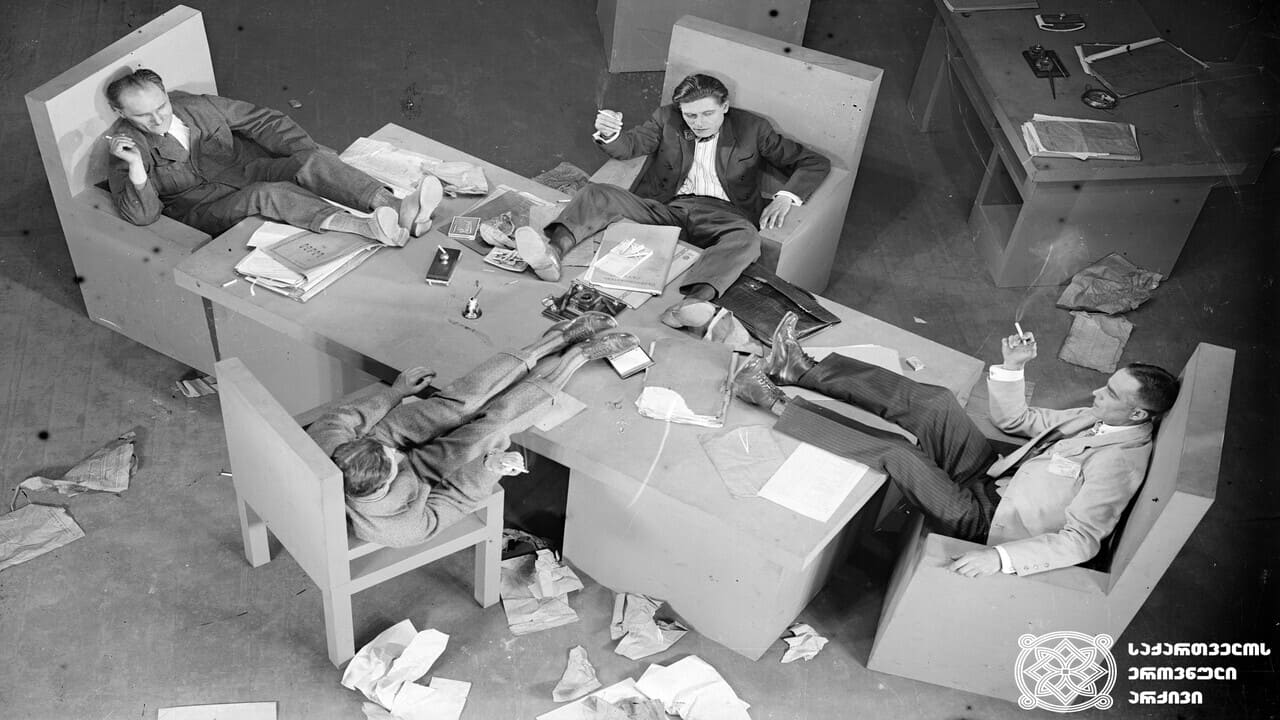
My Grandmother (1929)
The protagonist, a lazy pen-pusher, gets the sack for his bureaucratic idleness, and learns that the way back into the job market depends on getting a letter of recommendation from a "grandmother"
What people think about My Grandmother
My Grandmother (1929) is the kind of silent-era gem that feels startlingly modern: a razor-edged comedy about red tape, status-chasing, and the humiliations of trying to get back in the system after you’ve been tossed out of it. Kote Mikaberidze stages the bureaucrat’s scramble for a powerful “grandmother” with a mischievous, satirical bite, letting visual invention and physical humor do the talking while a surprisingly human undercurrent keeps it from turning mean. The vibe is brisk, absurd, and slyly angry in the best way—like a dream where office politics become a labyrinth you can’t wake up from. If you prefer naturalistic drama or dislike stylized silent filmmaking, it may not click, but if you’re even a little curious about cinema that skewers bureaucracy with fearless imagination, this one is a delight.
My Grandmother is trying to skewer bureaucracy with a surreal, satirical edge, following a useless office drone who discovers that getting rehired is less about merit and more about finding the right patron. If you’re expecting a cozy comedy-drama with clear character arcs, this can feel more like an experimental, era-specific jab—stylized, odd, and sometimes more interested in its concept than in emotional payoff. The pacing and silent-era presentation demand patience, and the humor can land as abrasive or opaque if you don’t already enjoy avant-garde satire. That said, if you like early cinematic weirdness and political cartoon energy aimed at workplace absurdity, it’s a sharp little time capsule worth your time.
Cast

Crew
- Director
- Kote Mikaberidze
- Cinematography
- Vladislav PoznanAnton Polikevich
Details
- Released
- December 1, 1929
- Language
- KA
- Studio
- JSC "Sakhkinmretsvi"
- IMDb
- tt0249816