
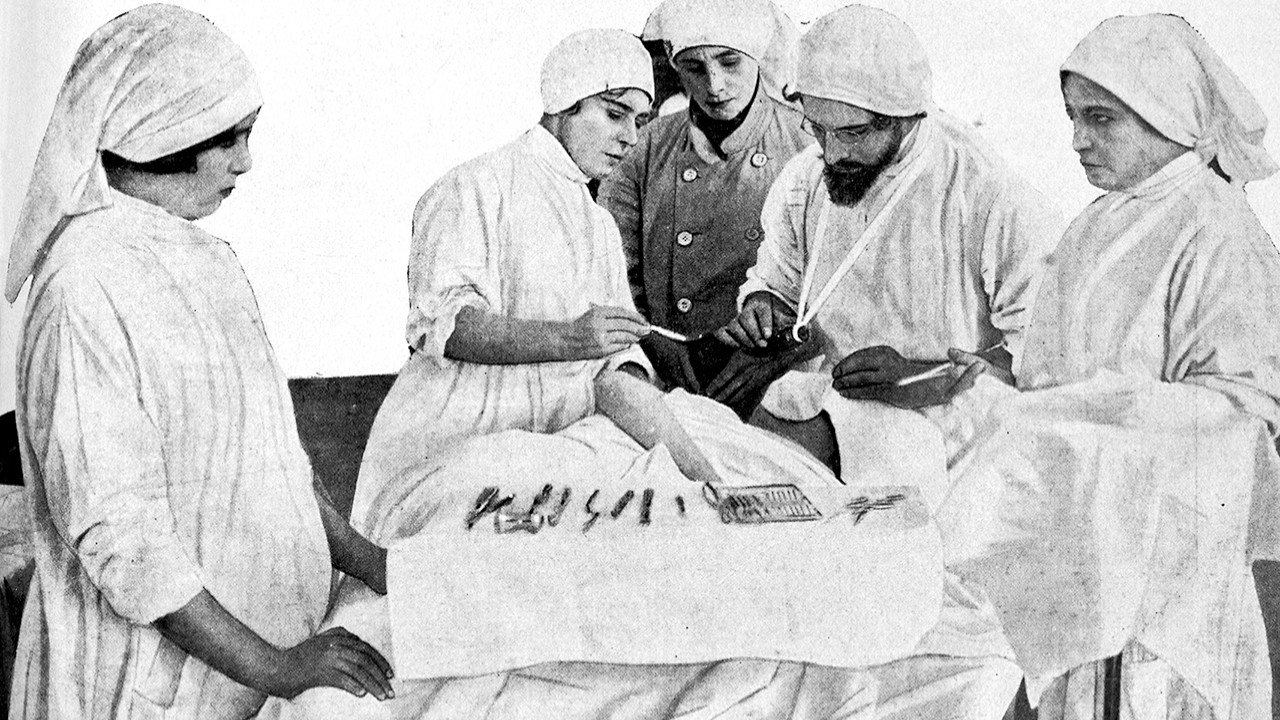
Woman of Tomorrow (1914)
A female doctor is so busy with her work that she has too little time for her fiancé. He falls in love with a waitress and the two have a child. Though considered by some to be a proto-feminist yarn, the film dwells on the consequences that equal rights for women may generate rather than openly champion suffrage. Similar in to Ibsen's The Doll House in many ways, the film provides mannered, solemn melodrama, ably acted by Mosjoukine and Yureneva.
What people think about Woman of Tomorrow
What makes Woman of Tomorrow special is how boldly it places a professional woman at the center of a marriage drama and then lets the era’s anxieties about modern life play out with surprising seriousness and emotional weight. Pyotr Chardynin stages the story with a solemn, Ibsen-like gravity, and the performances—especially Vera Yureneva’s controlled strength and Ivan Mosjoukine’s restless vulnerability—give the melodrama a human pulse instead of mere theatrics. The film’s vibe is mannered and intense, a silent-era moral storm where duty, love, and pride collide in rooms that feel suddenly too small for the lives being lived inside them. It isn’t a rousing suffrage cheerleading piece, and its perspective can feel cautious by today’s standards, but if you’re on the fence about early cinema, this is the kind of drama that reminds you how timeless adult dilemmas looked even in 1914.
Woman of Tomorrow is clearly aiming for a serious, socially minded melodrama about marriage, ambition, and what happens when a woman’s professional life stops being “acceptable” to the people around her. The problem is that its perspective can feel less like a bold proto-feminist statement and more like a cautionary tale, lingering on the “consequences” of women’s equality in a way modern viewers may find frustrating or dated. Expect a slow, solemn, very mannered silent-film style—emotion is big, pacing is deliberate, and nuance often takes a back seat to moralizing. If you’re patient with early cinema, Yureneva and Mosjoukine bring real conviction and the Ibsen-like domestic tension can be compelling, but if you want a progressive message or subtle character psychology, this may test your goodwill.
Cast
Crew
- Director
- Pyotr Chardynin
- Writers
- Aleksandr Voznesensky
- Cinematography
- Boris Zavelev
Details
- Released
- April 27, 1914
- Language
- Russian
- Studio
- A. Khanzhonkov and Co.
- IMDb
- tt0209508