
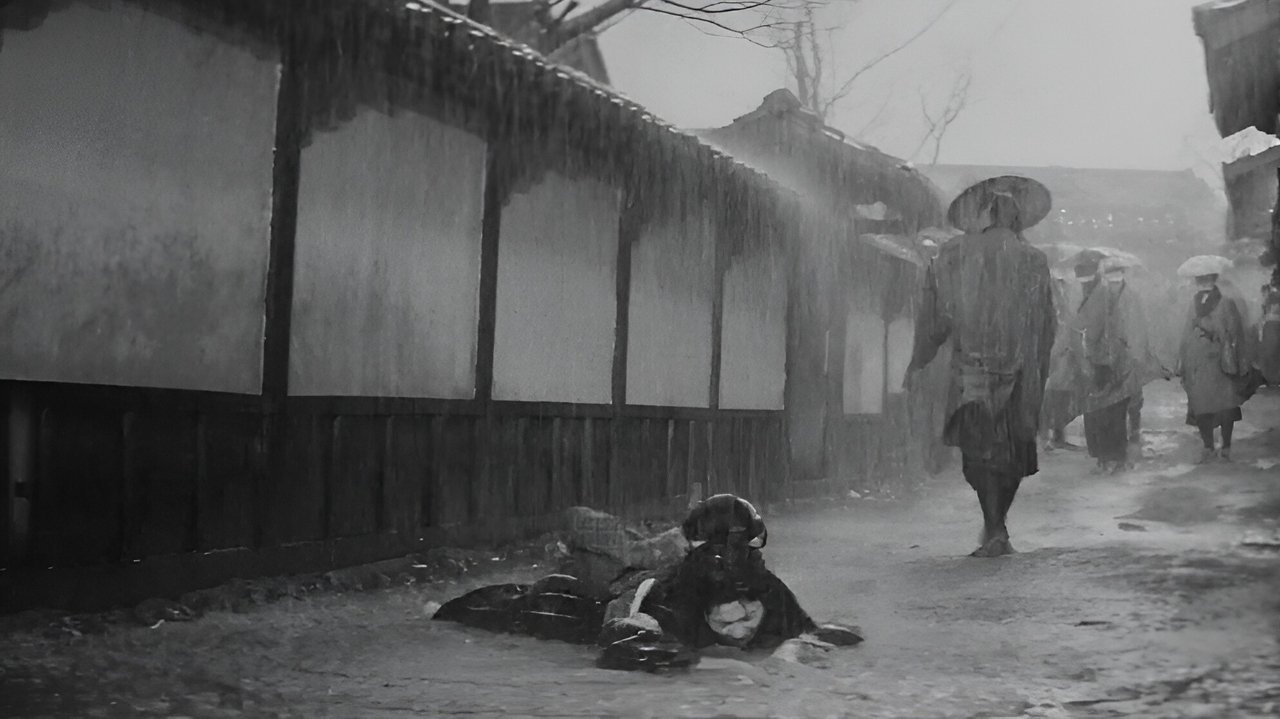
The Great Killing (1964)
A cynical samurai is left as the sole survivor to fulfill a plot to assassinate the puppet of a villain intent on usurping the shogunate in the 17th century. A Shogunate Elder connives to rule Japan by making his puppet, the Shogun's brother Tsunashige, the next Shogun. The best strategist in Japan, Yamaga, leads a plot to stop the Elder, but his cabal is betrayed and most of the conspirators are captured and tortured.
What people think about The Great Killing
The Great Killing is the kind of samurai film that earns its bloodshed: not as spectacle, but as a grim, principled stand against a rotten political machine. Eiichi Kudo stages the action with a bracing sense of purpose, letting every clash of steel feel like the last argument left when honor is cornered by corruption. The tone is hard-edged and unsentimental—more political thriller than romantic legend—yet it’s powered by the stubborn dignity of people who refuse to be bought, even when the odds turn cruel. If you want a glossy, heroic chanbara fantasy, this may feel too severe, but if you’re drawn to tense intrigue and morally charged swordplay, it’s a bracing watch.
The Great Killing is clearly aiming for a grim, politically charged samurai thriller where honor is a luxury and survival is a curse, with a lone swordsman caught in a web of betrayal, torture, and power grabs. If you’re hoping for a clean, heroic arc or a tightly plotted assassination story, this can feel more like a bleak march through intrigue and punishment than a satisfying payoff. The action leans toward brutal, functional clashes rather than flashy choreography, and the dense shogunate scheming may test your patience if you’re not already comfortable with period politics and lots of serious men talking in rooms. That said, if you want a dour, fatalistic tone and the kind of old-school jidaigeki mood where the system is the real villain, it has the right bite and atmosphere.
Cast






Crew
- Director
- Eiichi Kudō
- Writers
- Kaneo Ikegami
- Music
- Seiichi Suzuki
- Cinematography
- Osamu Furuya
- Editing
- Kozo Horiike
Details
- Released
- June 3, 1964
- Language
- Japanese
- Studio
- Toei Company
- IMDb
- tt0186939