
Red Angel (1966)
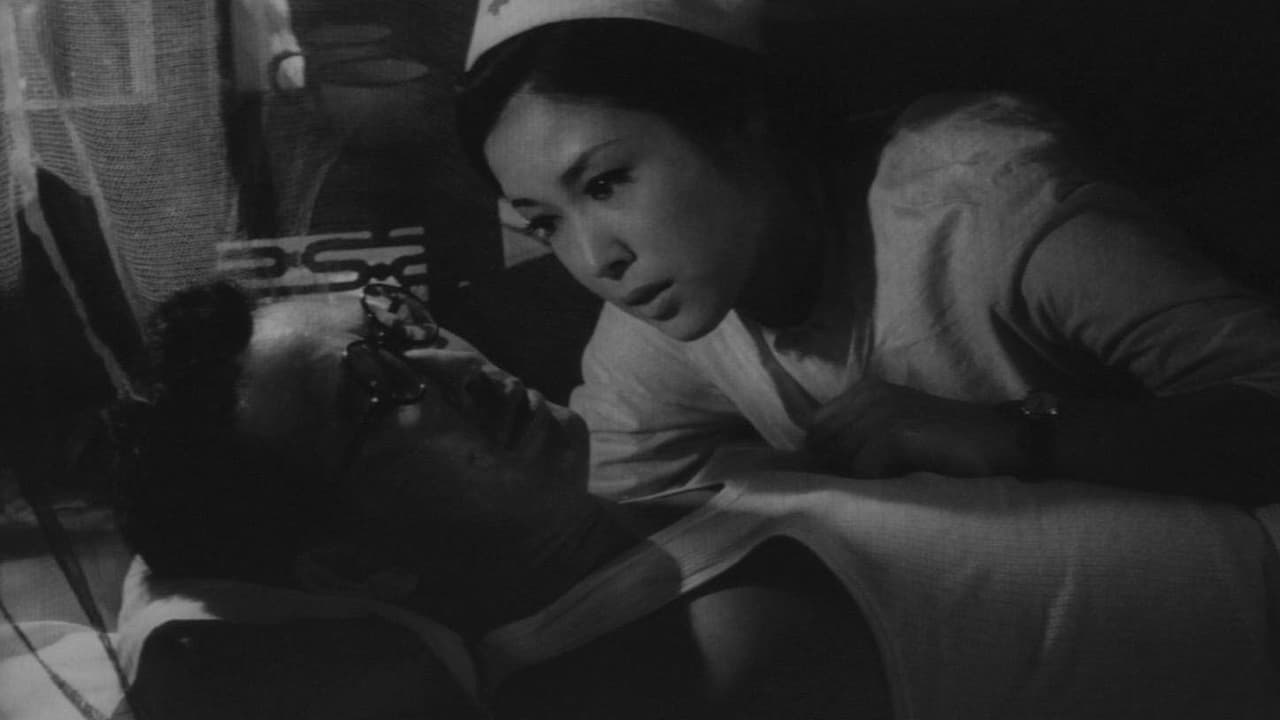
In 1939, Sakura Nishi is a young army nurse who is sent to the field hospitals in China during the Sino-Japanese war. She has to assist the surgeon Dr. Okabe with an incredible number of amputations. In the crowded wards, she gives sympathy to some of the soldiers, including sexually servicing one who has lost both arms and has no hope of returning home. She falls in love with Dr. Okabe, and follows him to the front, even though he is impotent from his morphine addiction.
What people think about Red Angel
Red Angel is one of those rare war films that doesn’t “depict” horror so much as place you inside it, with Yasuzō Masumura’s camera turning a field hospital into a moral pressure cooker where compassion, desire, and survival collide. Ayako Wakao gives a fearless, deeply human performance as a nurse whose tenderness becomes its own kind of rebellion, and the film’s brutal medical realism makes every quiet moment of connection feel hard-won and strangely luminous. The tone is stark and unsentimental—raw, sometimes shocking, but never cheap—building an anti-war argument out of exhaustion, bodily fragility, and the ways people cling to intimacy when the world is coming apart. This isn’t for viewers who shy away from graphic wartime injuries or sexual violence, but if you can meet it on its terms, it’s an unforgettable, wrenching piece of cinema that earns its power the honest way.
Red Angel is clearly trying to strip war of any heroism and show, through a nurse’s eyes, how constant trauma turns people into survivors at best and monsters at worst. Masumura directs with a cold, unblinking stare: the medical gore, amputations, and bodily suffering aren’t background texture, they’re the point, and it can feel punishing rather than “dramatic.” The film also wades into sexual violence and coercion in a way that’s deliberately bleak and unsparing, so if you’re looking for a romance-forward war drama, this will feel like a bait-and-switch. If you can handle its harshness, Ayako Wakao gives a committed, human performance and the movie’s moral discomfort is purposeful—but it’s absolutely not a watch for a casual evening or for viewers sensitive to graphic violence and assault.
Cast
 Ayako WakaoNurse Sakura Nishi
 Shinsuke AshidaDr. Okabe
 Yūsuke KawazuPvt. Orihara
- RRanko AkagiHead Nurse Iwashima
 Jōtarō SenbaPrivate Sakamoto
- DDaihachi KitaPvt. Nogami
 Jun OsanaiSpecial Duty Sergeant Major
- DDaigo InoueAdvance Guard Company's Fifth Chief
- AAyako IkegamiNurse Tsurusaki
 Takashi NakamuraHead of infantry
- KKenichi Tani
- KKisao TobitaPatient
- NNaomasa Kawashima
- KKyōsuke Shiho
- SShin Minatsu
- KKen Nakahara
- SShinji Sayama
Crew
- Director
- Yasuzō Masumura
- Writers
- Ryōzō Kasahara
- Producers
- Ikuo Kubodera
- Music
- Sei Ikeno
- Cinematography
- Setsuo Kobayashi
- Editing
- Tatsuji Nakashizu
Details
- Released
- October 1, 1966
- Language
- Japanese
- Studio
- Daiei Film
- IMDb
- tt0139820