
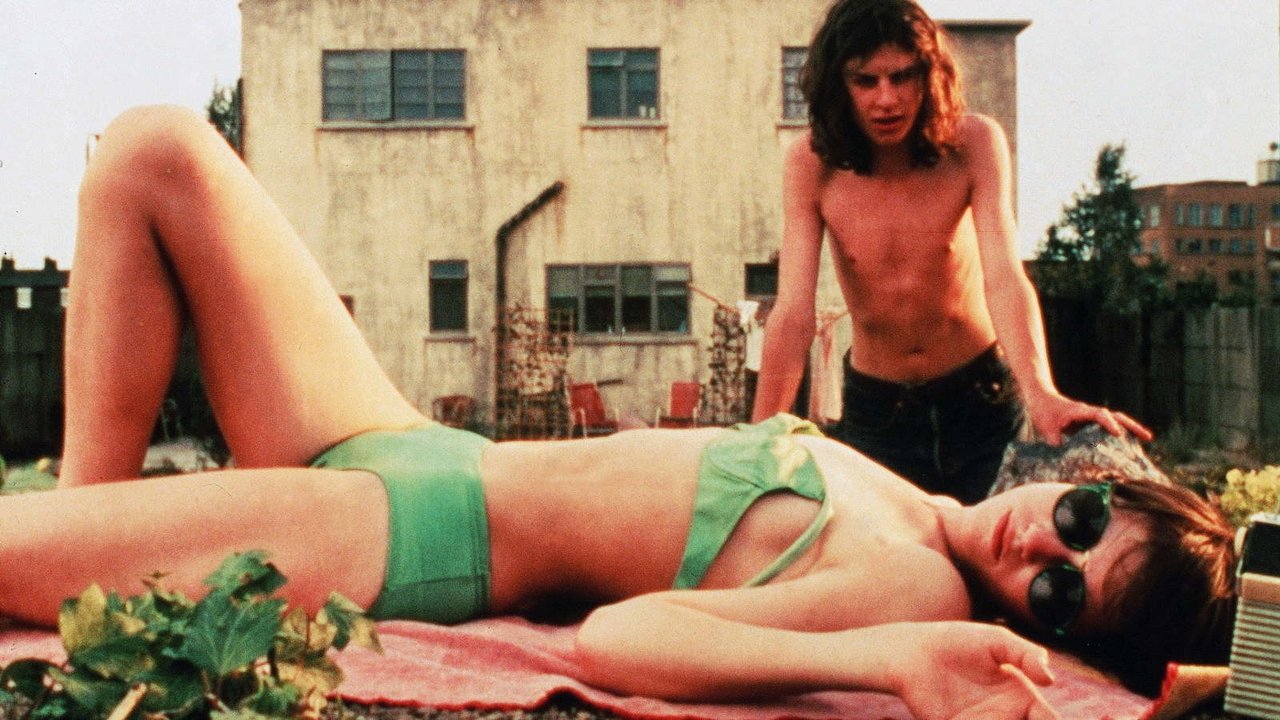
The Cement Garden (1993)
After the death of her husband, the mother of Julie, Jack, Sue and Tom begins to suffer from a mysterious illness. Aware that she is going to have to go into hospital she opens a bank account for the children, so that they can be financially self-sufficient and will be able to avoid being taken into care by the authorities. Unfortunately she also dies and Julie and Jack (the older, teenage children) decide to hide her body in the basement so that they can have free reign of their household. Soon Tom has taken to dressing as a girl whilst Sue has become increasingly reticent, confiding only to her diary, meanwhile Jack and Julie sense an attraction developing for each other. However Julie's new beau, Derek, threatens to unearth the many dark secrets within this family as he becomes increasingly suspicious of Jack.
What people think about The Cement Garden
The Cement Garden is the kind of quiet, unnerving drama that gets under your skin not with shocks, but with a cool, poetic control—an elegy for childhood that turns into something stranger the longer it lingers. Andrew Birkin films this broken little household with spare elegance, letting the silence, the cramped rooms, and the damp English light do as much storytelling as the dialogue, while Andrew Robertson and Charlotte Gainsbourg give performances so natural you almost forget how carefully calibrated they are. It’s faithful to Ian McEwan’s sensibility: intimate, atmospheric, and unblinking about how grief and secrecy can warp a family into its own sealed ecosystem. Fair warning, though: the film’s incest theme and morbid imagery are central, not incidental—if you can handle its discomfort, you’ll find a haunting, beautifully acted study of isolation that refuses to let you look away.
The Cement Garden is clearly aiming for a chilly, literary portrait of grief, isolation, and a family quietly rotting from the inside out, rather than a conventional thriller about a dark secret. It’s deliberately slow and restrained, which can make the tension feel more like a queasy drift than a gripping build, and the emotional punch may land as distant instead of devastating. The taboo elements (including incest themes and the presence of a hidden, decomposing body) aren’t played for shocky fun, but they’re still deeply uncomfortable and can feel lurid if you’re not on the film’s exact wavelength. If you like bleak, unsettling art-house drama and can tolerate ambiguity and discomfort, Charlotte Gainsbourg and the oppressive atmosphere are real draws; if you want catharsis, momentum, or clear moral framing, this will probably feel like an endurance test.
Cast





Crew
- Director
- Andrew Birkin
- Writers
- Andrew Birkin
- Music
- Edward Shearmur
- Cinematography
- Stephen Blackman
- Editing
- Toby Tremlett
Details
- Released
- February 20, 1993
- Language
- English
- Studio
- Laurentic Film Productions, Torii Production, ZDF
- IMDb
- tt0106535