
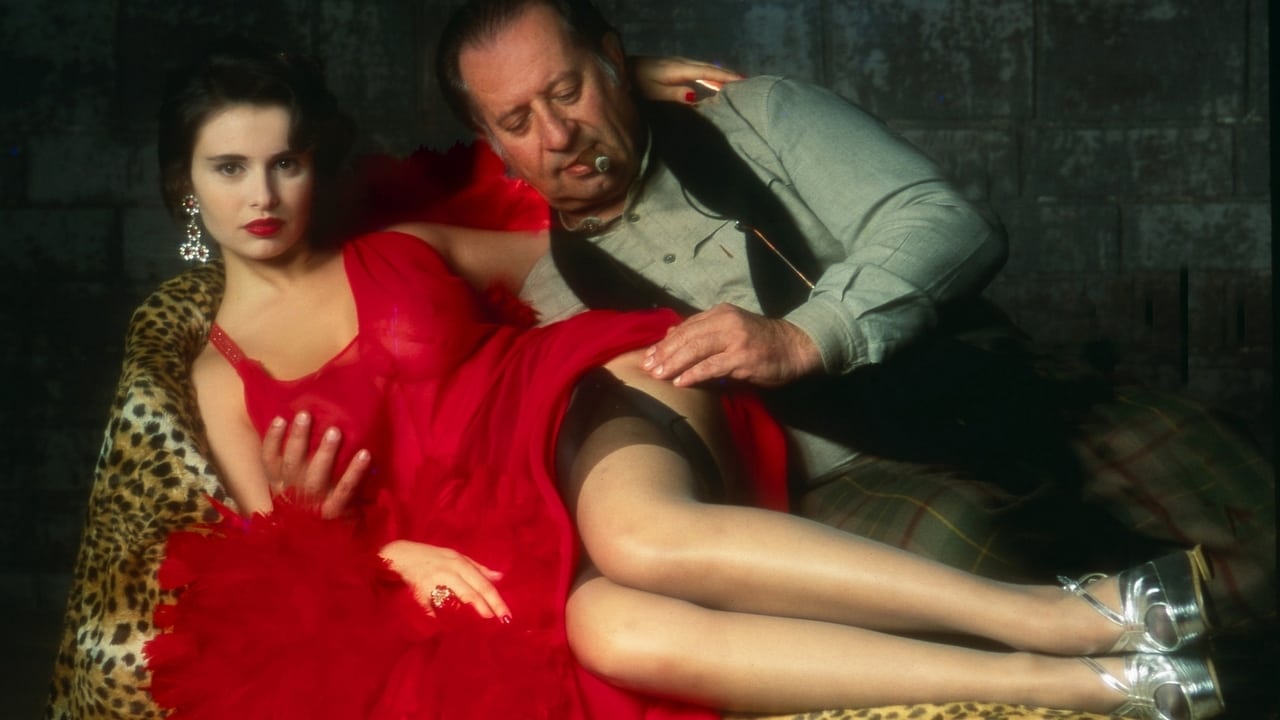
Paprika (1991)
In 1957 Trieste, a few months before the general ban on brothels, inexperienced country girl Mimma becomes Paprika to finance her useless boyfriend as a prostitute. Amid the hustle and bustle of Rome, Paprika drifts from one brothel to another as she learns the ropes and works her way up one client at a time. However, as Paprika embarks on a stormy journey of self-discovery and sexual liberation, the sense that something is missing haunts her. Is Paprika meant to experience a passionate romance and solve the great mystery of true love?
What people think about Paprika
What makes Paprika linger is the way Tinto Brass frames a notorious milieu with the sweep of a bittersweet coming-of-age story, set against a 1958 Italy on the verge of the Merlin Law that would shutter the brothels and change everything. Debora Caprioglio gives Paprika a disarming mix of innocence and steel, drawing you into a world that’s lush, theatrical, and deliberately provocative without turning her into a mere symbol. The film’s tone is sensual and melancholy at once—more a drifting waltz through desire, power, and self-invention than a tidy morality play—so you’re watching a character evolve as much as you’re watching a period. It isn’t for everyone: Brass’s gaze is unabashedly erotic and can feel indulgent, but if you’re open to an adult drama that’s as visually opulent as it is emotionally bruised, this one has a strange, persuasive pull.
Paprika is clearly trying to be a tragic, sensual coming-of-age story about a young woman swallowed by a changing Italy and the economics of desire, with Tinto Brass aiming for lush period atmosphere and operatic emotion. The problem is that the film often feels more interested in voyeuristic set-pieces than in giving Mimma’s inner life the depth the premise demands, so the “drama” can come off as thin, repetitive, or emotionally glib. If you’re expecting a grounded character study or a nuanced take on exploitation and agency, you may find it frustrating or even queasy in how it frames its heroine’s suffering and sexuality. That said, if you know Brass’s style and you’re looking for glossy 1950s brothel melodrama with striking visuals and a committed lead performance, it delivers that specific flavor—just don’t go in expecting subtlety.
Cast
 Debora CaprioglioPaprika
 Stéphane FerraraRocco
 Martine BrochardMadame Collette
 Stéphane BonnetFranco
- RRossana GavinelGina
 Renzo RinaldiCount Bastiano Rosasco
 Nina SoldanoJournalist
 Clara AlgrantiSciura Angelina
 Luciana CireneiDonna Olimpia
 John SteinerPrince Ascanio Del Bardo
 Valentine DemyBeba
 Luigi LaezzaNino
 Riccardo GarroneUncle Lele
 Paul MüllerMilvio
 Clarita GattoTosca
 Osiride PevarelloRemo
 Debora VernettiCarmen
 Elisabeth KazaMadame Catarsi
Crew
- Director
- Tinto Brass
- Producers
- Giuseppe AuriemmaAugusto Caminito
- Music
- Riz Ortolani
- Cinematography
- Silvano Ippoliti
- Editing
- Tinto Brass
Details
- Released
- February 13, 1991
- Language
- Italian
- Studio
- San Francisco Film, Scena Film
- IMDb
- tt0098063