
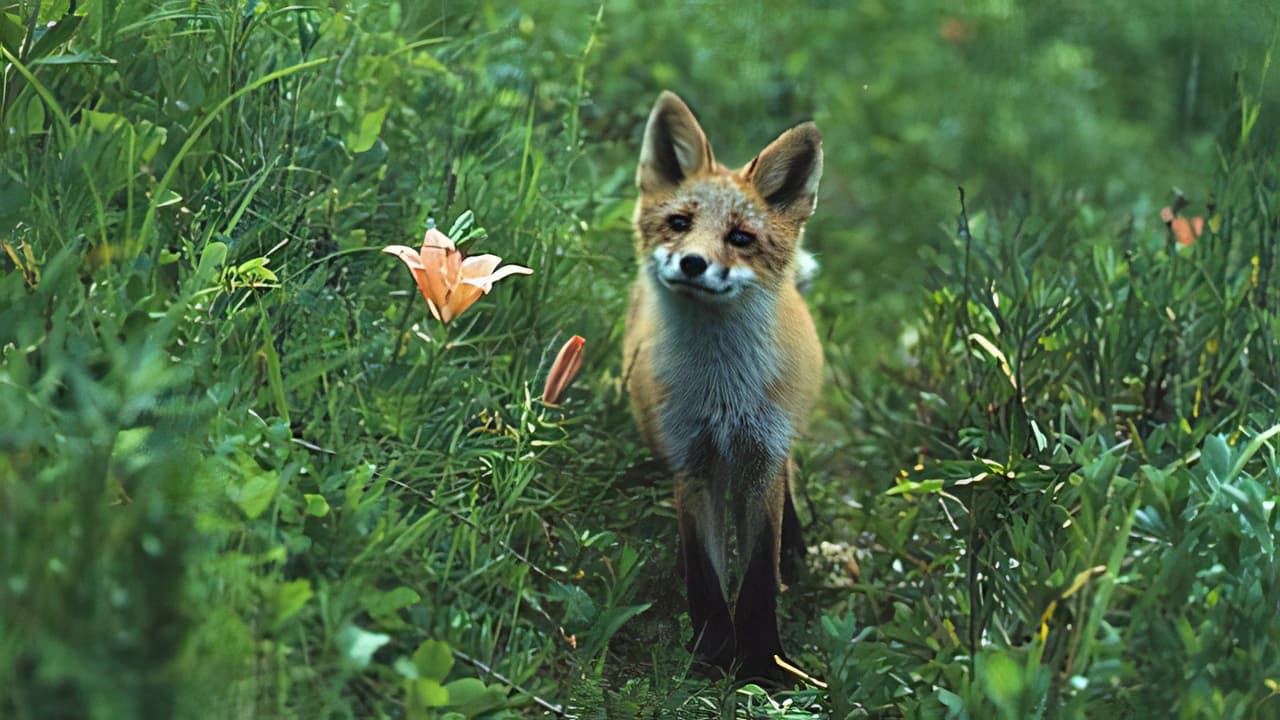
The Glacier Fox (1978)
Director Koreyoshi Kurahara chronicles a year in the lives of Flep and Leila, two foxes living in Hokkaido, Japan's northernmost island, where the freezing winters are long and the mild summers short. After Flep defeats another male fox to become Leila's lifelong partner, they mate and raise a litter of five kits. With their family complete, the group must contend with human interference in their habitat, such as chicken farms and snowmobiles, and struggle against the debilitating cold of winter. The animals experience both triumph and tragedy, as the law of this harsh land proves – only the strong survive.
What people think about The Glacier Fox
The Glacier Fox is special because it treats wildlife not as a cute postcard, but as a full-blooded family saga carved into snow and silence—captured with the patient eye of a documentarian and the emotional pull of a drama. Set in Hokkaido’s stark, beautiful extremes, it follows two foxes through courtship, parenthood, and the daily negotiations between instinct, weather, and the encroaching hum of humans, creating a tone that’s both wondrous and quietly suspenseful. Koreyoshi Kurahara’s filmmaking turns footprints in powder and a glance across a frozen field into storytelling, and the narration gives the experience a classic, fireside gravity without talking down to you. Be warned: it’s honest about nature’s costs, and some scenes are genuinely upsetting—so it’s best for older kids and adults—but if you can handle that candor, it’s an unforgettable reminder of how hard-won every warm moment in the wild really is.
The Glacier Fox is clearly aiming for an intimate, nature-first portrait of a fox family in Hokkaido, mixing documentary observation with a slightly dramatized “life story” structure and steady narration. The problem is that it doesn’t soften the realities of survival: the film reportedly includes multiple upsetting animal deaths and suffering, which can feel brutal and even exploitative if you’re expecting a gentle family wildlife movie. The pacing is also more patient and observational than plot-driven, so if you need constant momentum or clear human characters, it may feel slow and emotionally heavy. If you can handle stark nature footage and want a wintry, beautifully photographed reminder that the wild isn’t cute, it has power—but for sensitive viewers or young kids, this is likely a hard pass.
Cast

Crew
- Director
- Koreyoshi Kurahara
- Producers
- Shintaro TsujiMark L. Rosen
Details
- Released
- July 15, 1978
- Language
- Japanese
- Studio
- Sanrio, Samuel Goldwyn Films
- IMDb
- tt0079212