
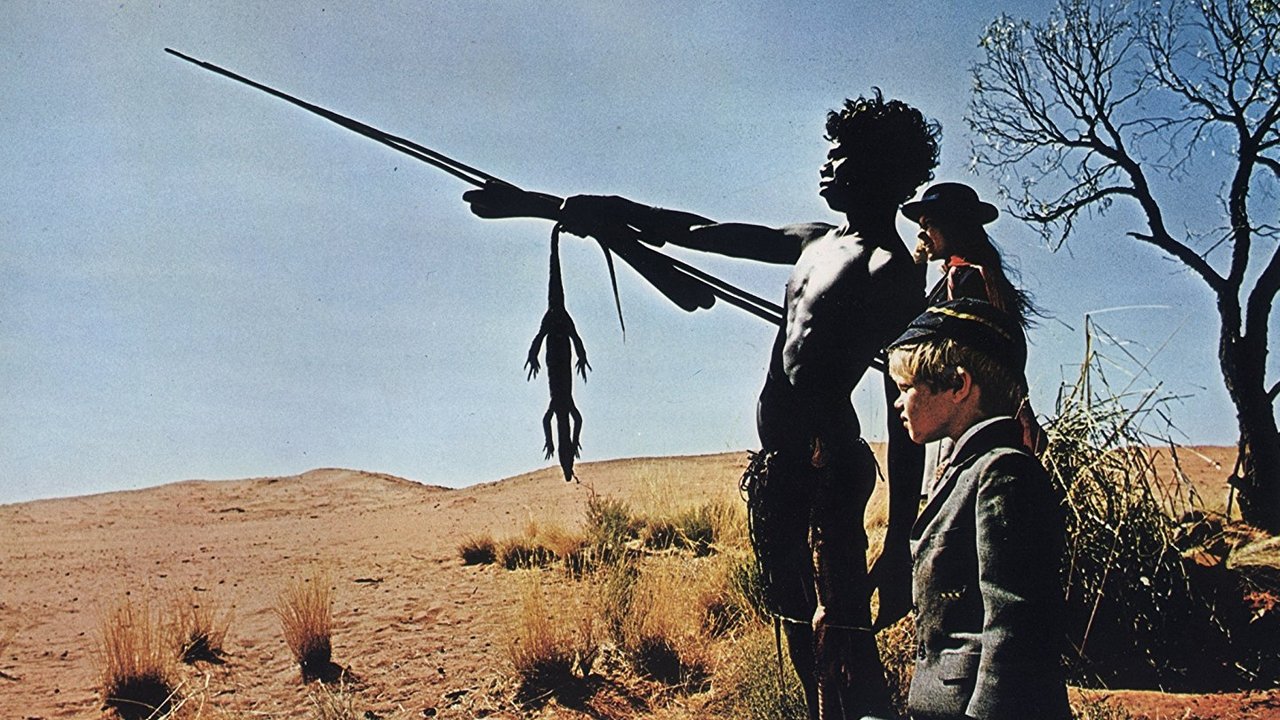
Walkabout (1971)
Under the pretense of having a picnic, a geologist takes his teenage daughter and 6-year-old son into the Australian outback and attempts to shoot them. When he fails, he turns the gun on himself, and the two city-bred children must contend with harsh wilderness alone. They are saved by a chance encounter with an Aboriginal boy who shows them how to survive, and in the process underscores the disharmony between nature and modern life.
What people think about Walkabout
What makes Walkabout special is how it turns the Australian outback into both a cathedral and a crucible—an overwhelmingly beautiful place that also tests every civilized assumption its characters bring with them. Nicolas Roeg tells the story with a filmmaker’s eye for pure cinema: spare dialogue, hypnotic imagery, and a sense of rhythm that makes survival feel less like plot mechanics and more like an awakening. It’s intense and sometimes unsettling, but the film’s quiet power comes from the way it observes nature, culture, and adolescence with equal fascination, letting meaning rise from glances, gestures, and landscape. Fair warning: the opening trauma, brief nudity, and scenes of hunting make it a tough sit for some, but if you’re on the fence and want a film that lingers like a half-remembered dream, this one earns your attention.
Walkabout is trying to be a poetic, almost wordless clash between modern life and the raw indifference of nature, and Nicolas Roeg commits hard to mood, imagery, and symbolism over tidy storytelling. If you need clear character arcs, lots of dialogue, or a plot that moves with conventional momentum, this can feel slow, emotionally distant, and occasionally more like a visual essay than a drama. It’s also not a casual watch: the opening violence, nudity involving a teen character, and matter-of-fact animal hunting/killing will be deal-breakers for some. The upside is that if you’re open to arthouse pacing and unsettling contrasts, it’s beautifully shot, hauntingly atmospheric, and memorable in a way safer films rarely manage.
Cast


Crew
- Director
- Nicolas Roeg
- Writers
- Edward BondNicolas Roeg
- Producers
- Max L. RaabSi Litvinoff
- Music
- John Barry
- Cinematography
- Nicolas Roeg
- Editing
- Alan PattilloAntony Gibbs
Details
- Released
- July 1, 1971
- Language
- English
- Studio
- Si Litvinoff Film Production, Max L. Raab Productions
- IMDb
- tt0067959