
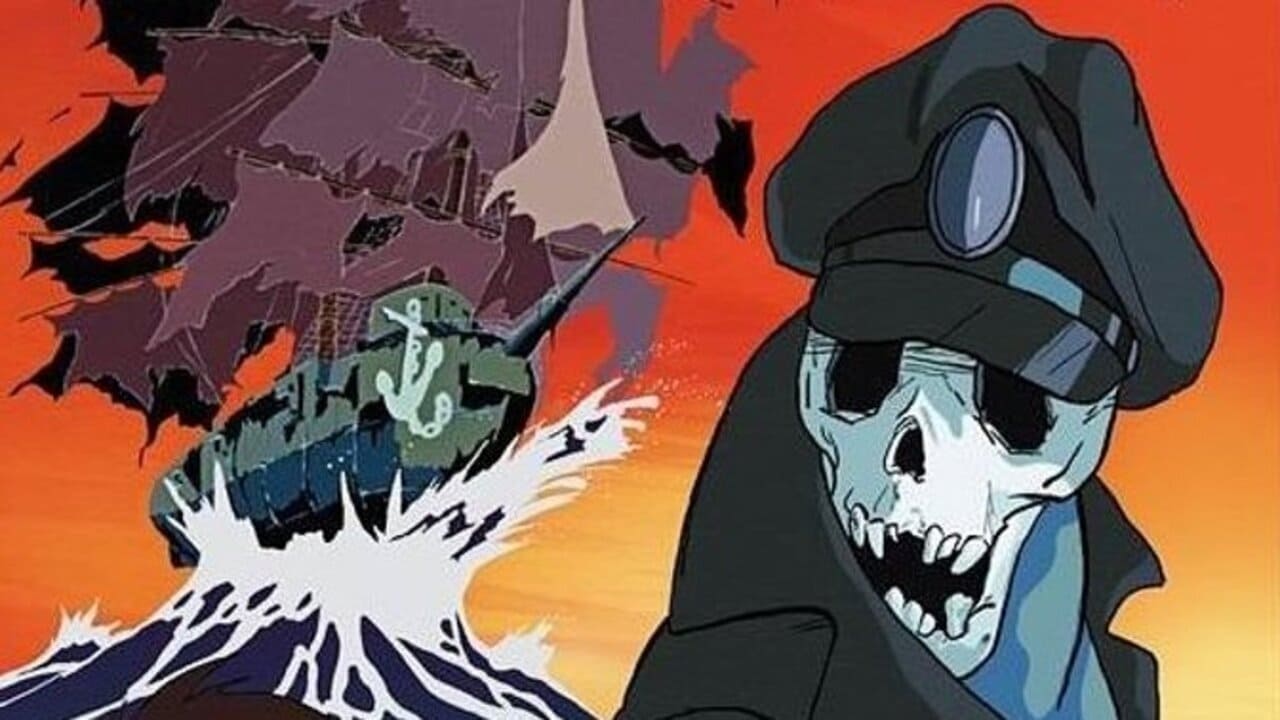
Flying Phantom Ship (1969)
Hayato's home city is under attack from a gigantic robot. His parents are lying dead in the rubble and the only remaining friend is his dog. His only thought now is revenge against the owner of the Phantom Ship (from where the robot said he was sent). He ends up in the house of Kuroshio, the leader of the fight against the Phantom Ship and the most important person in the city. By complete accident, Hayato finds his way to an underground passageway where he realises that the true nature of events does not mesh with what Kuroshio has told him. His life is now in great danger, and only he can stop the plans of the evildoers.
What people think about Flying Phantom Ship
Flying Phantom Ship is special because it feels like a fever-dream adventure from the moment it starts—an animated sci-fi horror yarn that’s constantly inventing new sights, new threats, and new reasons to lean in. It barrels forward with chaotic, high-voltage energy, yet beneath the spectacle of giant machines and shadowy villains there’s a sharp, surprisingly pointed skepticism about power, money, and the stories authorities sell to keep people obedient. The tone is pulpy and nightmarish in the best way: part Saturday-matinee serial, part paranoid conspiracy, all wrapped in a vivid slice of anime history that still plays with real bite. If you want slow-burn subtlety, it may feel like too much too fast, but if you’re craving imaginative momentum with a sting in its tail, it’s a blast.
Flying Phantom Ship is clearly trying to be a pulpy, kid-forward sci-fi horror adventure with big robots, conspiracies, and a grim inciting tragedy that pushes its hero into a wider mystery. The problem is it barrels through plot beats like it’s late for the next set piece, so characters, motives, and even the world-building can feel sketched in rather than earned, and the tonal jumps don’t always land. The animation has flashes of style and atmosphere, but it can also look uneven, which makes the urgency feel more like rushing than momentum. If you enjoy vintage Toei weirdness, brisk thrills, and don’t mind thin characterization (and a noticeable lack of meaningful female roles), you’ll find some charm here—but if you want coherent pacing, depth, or emotional follow-through, this may test your patience.
Cast
 Masako NozawaHayato (voice)
- AAkio TanakaChairman Kuroshio (voice)
 Akira NagoyaHayato's Father (voice)
 Gorō NayaCaptain (voice)
- KKyôko SatomiKuroshio's wife (voice)
 Kosei TomitaHaniwa (voice)
 Yukiko OkadaRuriko (voice)
 Junko HoriBoa Juice Ad (voice)
 Junpei TakiguchiBoa Juice Ad (voice)
 Hiroshi Masuoka
 Hiroshi Otake
 Ichiro Nagai
 Isamu Tanonaka
 Keiichi Noda
 Yonehiko Kitagawa
- RRyō Ishihara
Crew
- Director
- Hiroshi Ikeda
- Writers
- Hiroshi IkedaMasaki Tsuji
- Producers
- Hiroshi Okawa
- Music
- Kōsuke Onozaki
- Cinematography
- Hiroshi TakedaYukio Katayama
Details
- Released
- July 20, 1969
- Language
- Japanese
- Studio
- Toei Animation, Toei Company
- IMDb
- tt0065021