
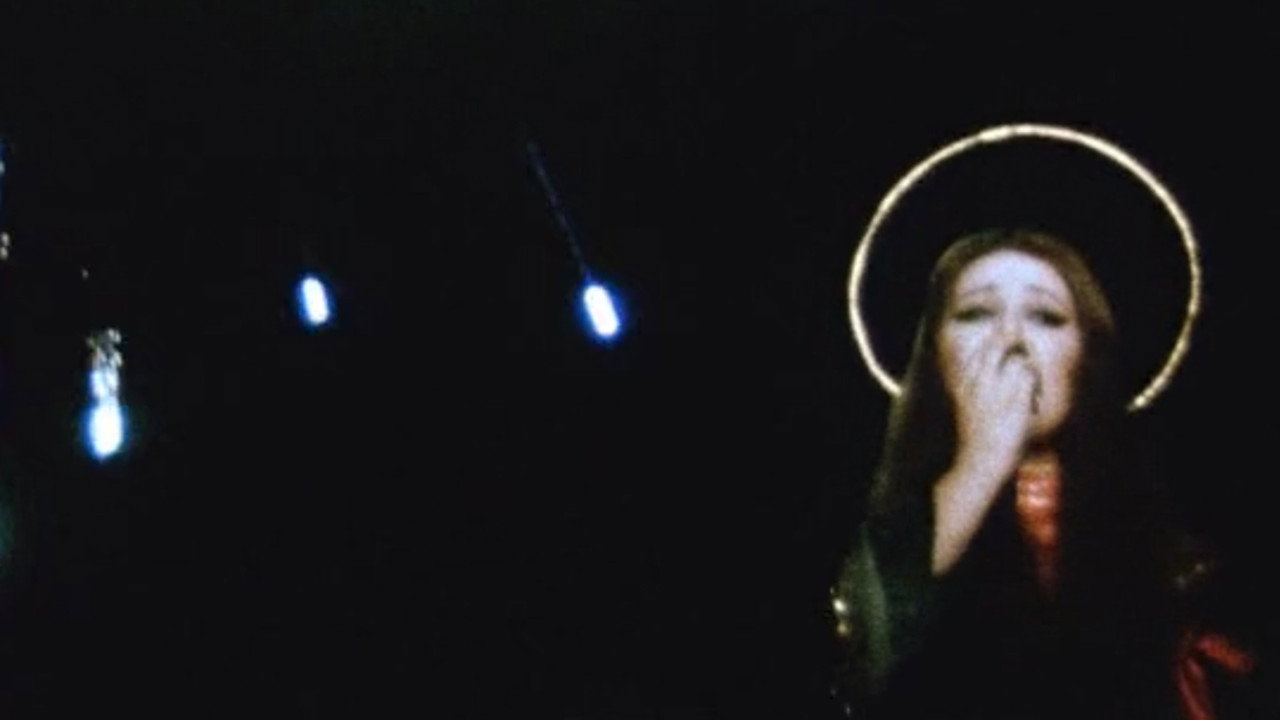
Our Lady of the Turks (1968)
To the protagonist, an intellectual so feverish that he seems pathologically unrecoverable, a confused memory resurfaces of a massacre carried out by the Turks in Otranto. Immersing himself in one of the victims, in the unconscious desire to eviscerate himself, a woman appears to him, Margherita, who, in the guise of Santa Maria d'Otranto, treats him with compassionate love. In the hallucinating succession of memories intertwined with historical events, the protagonist finds himself in contact with his environment, his land, his country.
What people think about Our Lady of the Turks
Our Lady of the Turks is special because it doesn’t just tell a story—it stages a fever dream of faith, history, and self-loathing with the intensity of a private exorcism, filtered through Carmelo Bene’s singular, poet-provocateur sensibility. The film moves like a piece of avant-garde music: images, voices, and symbols collide with a Cocteau-and-Rimbaud kind of rapture, creating a gorgeous, unsettling pageant where a man’s war against his culture becomes something mythic and intimate at once. It’s funny in its blasphemous audacity, hypnotic in its visual invention, and unexpectedly tender when the saintly figure enters not as a sermon, but as compassionate pressure on an unlivable mind. This isn’t for viewers who need clear plot handrails or conventional realism, but if you’re on the fence and curious about cinema as personal vision—cinema that risks everything to feel like thought itself—this one is a rare, bracing encounter.
Our Lady of the Turks is trying to be a fever-dream assault on faith, tradition, and identity, less a “story” than a provocation staged as cinema. Carmelo Bene prioritizes fragmented monologues, surreal tableaux, and abrasive rhythm over clarity, so if you need plot traction, emotional access, or even basic orientation, you’ll likely feel locked out and irritated. It’s also aggressively anti-devotional in tone, which can read as exhilaratingly radical or simply exhausting and self-indulgent, depending on your tolerance for avant-garde theater energy on film. If you’re into experimental, symbolic, deliberately alienating art that treats meaning as something you wrestle from the wreckage, there’s a strange, hypnotic pull here; if not, it may feel like being shouted at in a language you only half understand.
Cast

Crew
- Director
- Carmelo Bene
- Writers
- Carmelo Bene
- Producers
- Giorgio PataraCarmelo Bene
- Editing
- Mauro Contini
Details
- Released
- September 3, 1968
- Language
- Italian
- Studio
- Patara
- IMDb
- tt0063366