
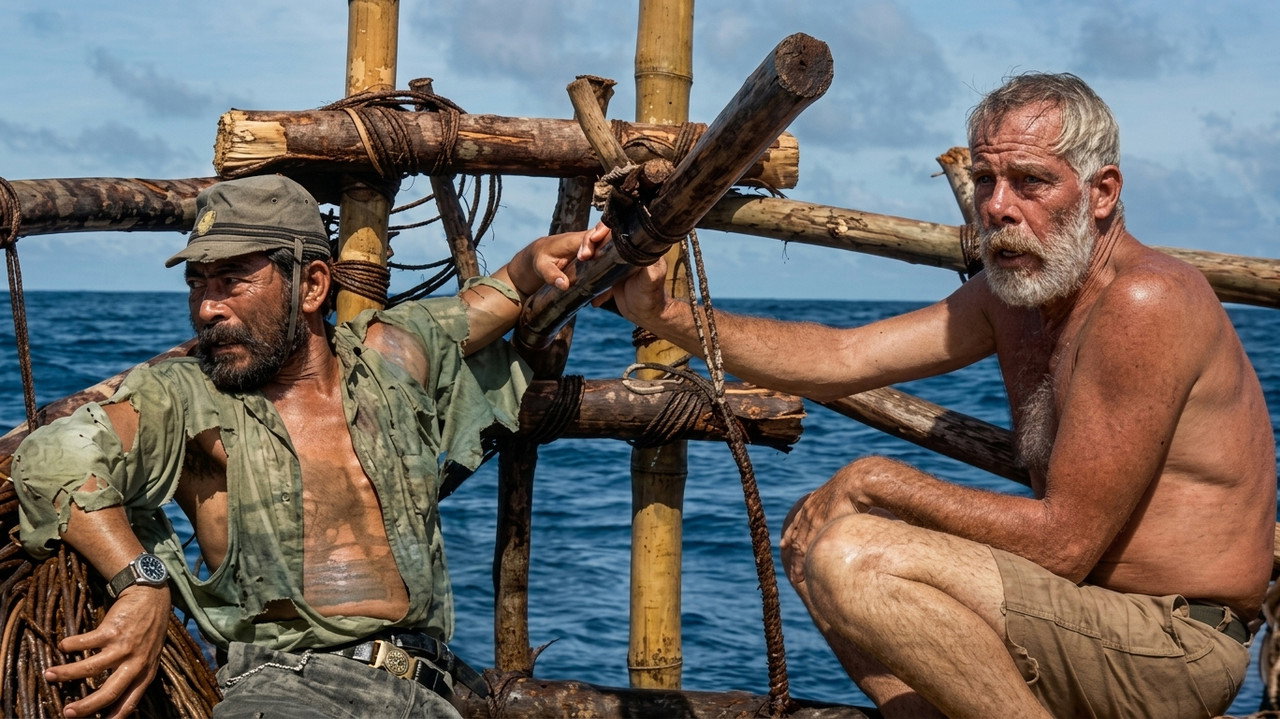
Hell in the Pacific (1968)
During World War II, a shot-down American pilot and a marooned Japanese navy captain find themselves stranded on the same small uninhabited island in the Pacific Ocean.
What people think about Hell in the Pacific
Hell in the Pacific is a war film that dares to strip the battlefield down to its rawest elements: two enemies, one island, and the stubborn, human need to survive. John Boorman turns that simple setup into something tense, slyly funny, and quietly profound, letting Lee Marvin and Toshirō Mifune communicate as much with posture and silence as with words, until every shared task feels like a hard-won truce. The movie’s power is in its understatement—no grand speeches, just the gripping push and pull between pride, fear, and reluctant respect, shot with an elemental, sun-baked beauty that makes the island feel both paradise and prison. If you want a conventional combat picture with big action beats, this isn’t that, but if you’re open to a lean, intriguing survival drama anchored by two towering performances, it’s an underseen classic that still lands with force.
Hell in the Pacific is clearly aiming for a stripped-down, almost wordless fable about two enemies forced to share the same patch of sand, and the premise is strong enough to hook you immediately. The problem is that the film leans so hard on symbolism and ritualized conflict that it can feel repetitive and oddly vague, like it’s circling a point it never quite lands. If you’re expecting a tense survival adventure or a psychologically rich war drama, you may find it slow, a bit contrived, and ultimately more “idea” than payoff. Still, Lee Marvin and Toshirō Mifune bring real presence, and when the movie settles into uneasy cooperation, it briefly becomes the human story it wants to be.
Cast
Crew
- Director
- John Boorman
- Music
- Lalo Schifrin
- Cinematography
- Conrad Hall
- Editing
- Thomas Stanford
Details
- Released
- December 19, 1968
- Language
- English
- Studio
- Selmur Productions
- IMDb
- tt0063056