
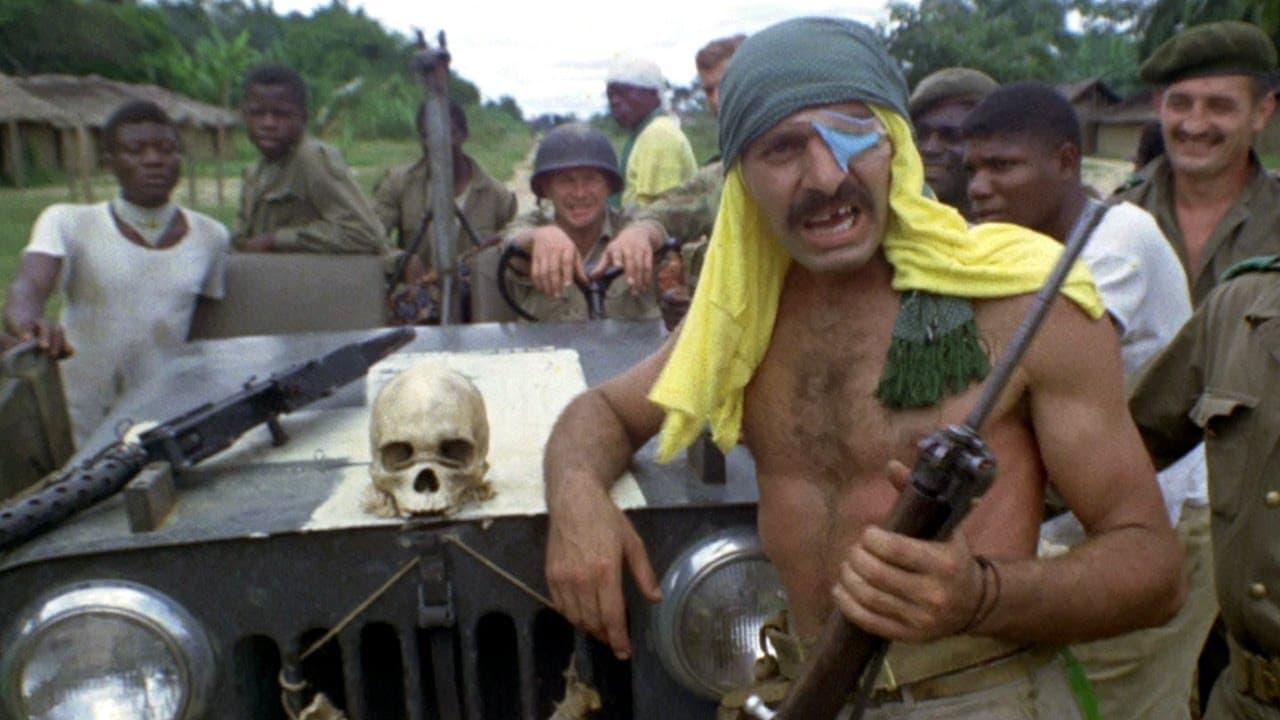
Africa Blood and Guts (1966)
A chronicle of the violence that occurred in much of the African continent throughout the 1960s. As many African countries were transitioning from colonial rule to other forms of government, violent political upheavals were frequent. Revolutions in Zanzibar and Kenya in which thousands were killed are shown, the violence not only political; there is also extensive footage of hunters and poachers slaughtering different types of wild animals.
What people think about Africa Blood and Guts
Africa Blood and Guts is the kind of documentary that doesn’t merely describe history—it confronts you with it, using raw, on-the-ground footage to capture the terrifying volatility of a continent shaking off colonial rule and lurching into new power struggles. Jacopetti and Prosperi have an undeniable eye for images that stick, and when the film leans into its journalistic impulse, it can feel like a grim time capsule: urgent, unsettling, and weirdly clarifying about how quickly celebration can curdle into chaos. The tone is blunt and abrasive, more shock-reportage than measured lecture, and its attention to the era’s upheavals gives it a bleak momentum that’s hard to look away from. It’s also absolutely not for everyone—there is real, graphic violence (including animal slaughter) and a sensational edge that can feel exploitative—but if you can handle that, it’s a harrowing watch that forces you to wrestle with what “history” looks like when it’s still smoking.
Africa Blood and Guts is trying to be a hard-edged chronicle of post-colonial upheaval in 1960s Africa, using real newsreel-style footage to shock you into paying attention. The problem is it often feels less like history and more like a sensational “look at the chaos” montage, offering graphic death—human and animal—without the context or balance that would make it informative rather than exploitative. The tone has been widely criticized as racist and dishonest, and if you’re looking for a respectful documentary that helps you understand events instead of gawking at them, this will likely feel ugly and manipulative. The only real “redeeming” quality is that it’s a time capsule of what certain filmmakers thought was acceptable in the mondo-doc era, but that’s a niche curiosity, not a recommendation.
Cast






Crew
- Directors
- Gualtiero JacopettiFranco Prosperi
- Producers
- Angelo Rizzoli
- Music
- Riz Ortolani
- Cinematography
- Antonio Climati
Details
- Released
- February 11, 1966
- Language
- Italian
- Studio
- Cineriz
- IMDb
- tt0060073