
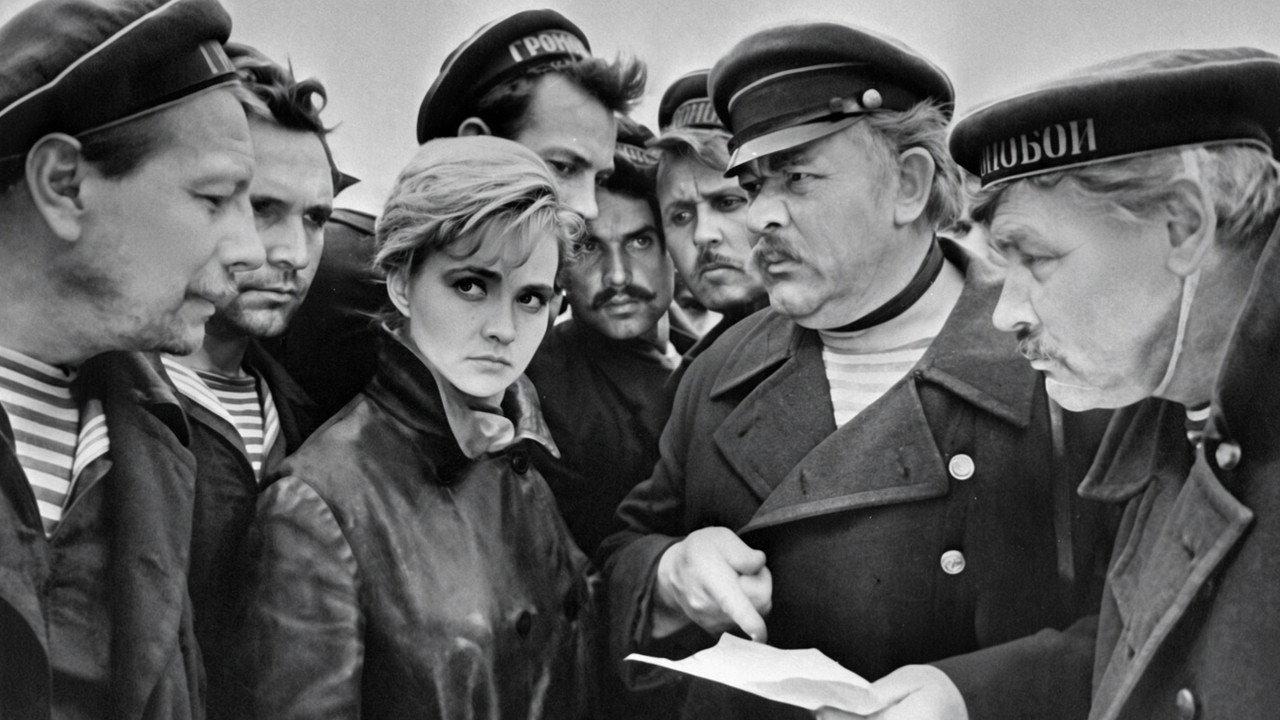
An Optimistic Tragedy (1963)
1918 year. A woman commissar has been appointed from the Central Committee of the Bolshevik Party to the Russian warship Gromoboi, which is ruled by anarchist sailors. The leader of the ship is the anarchist Vozhak. The Commissioner was instructed to reorganize the naval detachment into the First Sailor Regiment. She faces a difficult task: to win the authority of the sailors and eradicate anarchy. Of the remaining officers on the ship — lieutenant Bering, who served in the tsarist fleet on the battleship "Emperor Paul I". He must become the commander and, together with the sent commissar, lead the regiment to the front in the Black Sea region.
What people think about An Optimistic Tragedy
An Optimistic Tragedy is special because it turns a cramped warship into a pressure cooker for ideas—revolutionary zeal, personal honor, and raw survival—then lets the sparks fly in scenes that feel both theatrical and fiercely alive. Samson Samsonov stages the clash between a steely woman commissar and a swaggering anarchist crew with a bold, almost operatic intensity, and Margarita Volodina anchors it with a performance that’s all nerve and conviction without ever slipping into caricature. The film’s black-and-white imagery gives it a bracing, historical weight, while the dialogue-driven standoffs and sudden bursts of violence create a vibe that’s part political drama, part moral battlefield. It won’t be for everyone—its Soviet-era earnestness and stage-like grandeur can feel formal—but if you’re drawn to war stories that argue as much as they shoot, this one is riveting.
An Optimistic Tragedy is aiming for a serious, stage-like war parable about ideology colliding with chaos, with a rare-for-its-era focus on a woman commissar trying to impose discipline on a volatile ship’s crew. If you’re expecting a rousing naval action film, you may find it talkier than you’d like, with speeches and symbolic confrontations doing more of the heavy lifting than suspense or realism. The politics are front and center and can feel didactic, so viewers allergic to Soviet-era messaging or moral certainty may struggle to connect. That said, the performances bring real heft and the central power struggle has bite, so it’s worth your time if you like historical drama that plays more like theater than battlefield spectacle.
Cast
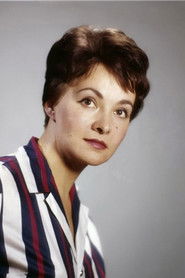 Margarita Volodinacommissar
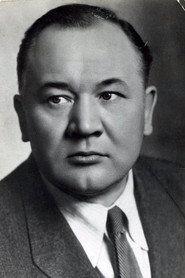 Boris Andreyevvozhak
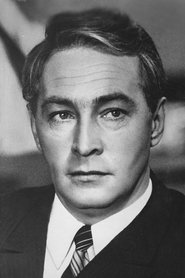 Vyacheslav TikhonovAleksei
 Vsevolod SanayevSiplyy
- OOrvo BjörninenVainonen
 Vsevolod SafonovBering
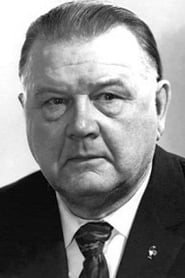 Ivan Zhevagoboatswain
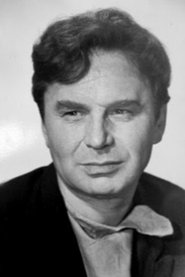 Daniil NetrebinRyaboy
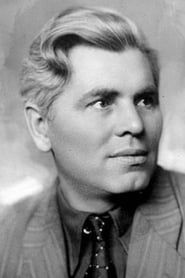 Grigory Mikhaylovold sailor
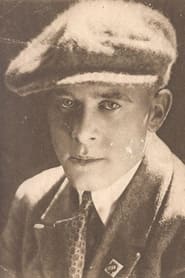 Pyotr Sobolevskyship's doctor
 Erast Garinvozhachok
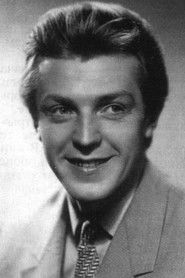 Oleg Strizhenovfirst officer
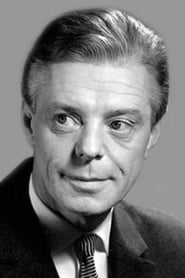 Gleb Strizhenovsecond officer
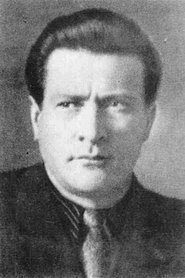 Aleksey Glazyrinpresenter
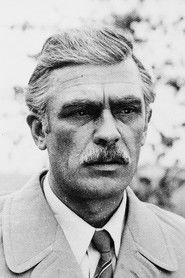 Valentin Belokhvostikpresenter
- IIosif Vankovtattooed sailor
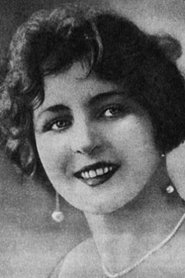 Veronika Buzhinskayawoman in black
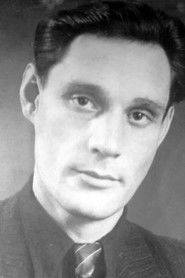 Viktor Shulgintall sailor
Crew
- Director
- Samson Samsonov
- Producers
- Aleksandr Yablochkin
- Music
- Vasily Dekhteryov
- Cinematography
- Vladimir Monakhov
- Editing
- Aleksandra Kamagorova
Details
- Released
- June 12, 1963
- Language
- Russian
- Studio
- Mosfilm
- IMDb
- tt0057388