
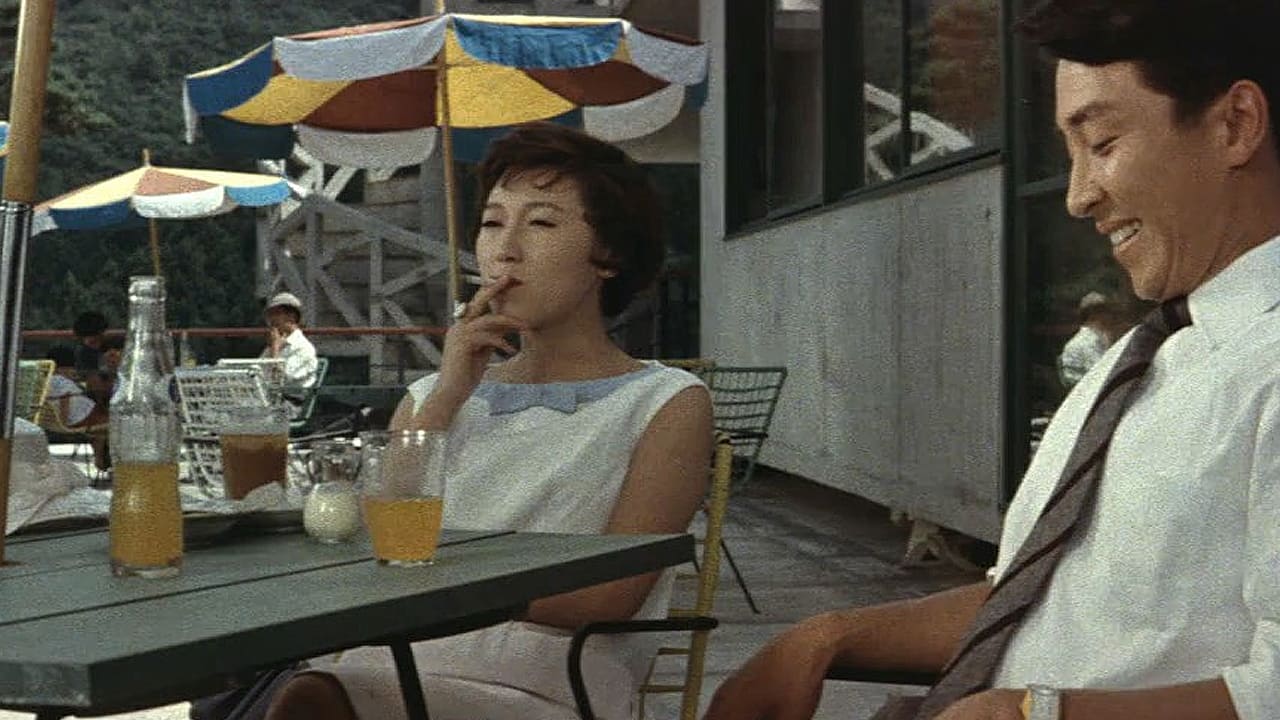
The Eternal Rainbow (1958)
Two men at an ironworks encounter roadblocks: the first does not have the grades to get a job, while the other finds himself falling for a co-worker.
What people think about The Eternal Rainbow
The Eternal Rainbow (1958) finds poetry in smoke and steel, turning an ironworks into a stage for big questions about dignity, ambition, and what it means to build a life inside an industrial machine. It’s the kind of drama that stays consistently absorbing because it treats everyday setbacks and unexpected feelings with real seriousness, anchored by strong performances that make the characters’ hopes feel earned rather than scripted. The filmmaking has a quietly confident, cinematic eye—compositions that let the factory’s hard geometry speak without shouting—giving the story a reflective, thought-provoking mood. If you’re looking for explosions or melodrama, this isn’t that, but if you want a humane, intelligent film that lingers in the mind, it’s an easy recommendation.
The Eternal Rainbow is clearly aiming for a serious, socially minded portrait of working-class life, using two men at an ironworks to question what industry promises versus what it delivers. The problem is it tells that story in a way that can feel needlessly knotty: the narrative jumps around, the editing is abrupt, and the documentary-style opening may test your patience before the drama even settles. If you like clean storytelling and emotional clarity, this will likely come off as confusing rather than profound. If you’re up for a challenging, ambivalent film that values mood and ideas over smooth momentum, there’s a gritty sincerity here that can still land.
Cast



Crew
- Director
- Keisuke Kinoshita
- Writers
- Keisuke Kinoshita
- Producers
- Masaharu Kokaji
- Music
- Chūji Kinoshita
- Cinematography
- Hiroshi Kusuda
- Editing
- Yoshi Sugihara
Details
- Released
- October 28, 1958
- Language
- Japanese
- Studio
- Shochiku
- IMDb
- tt0051828