
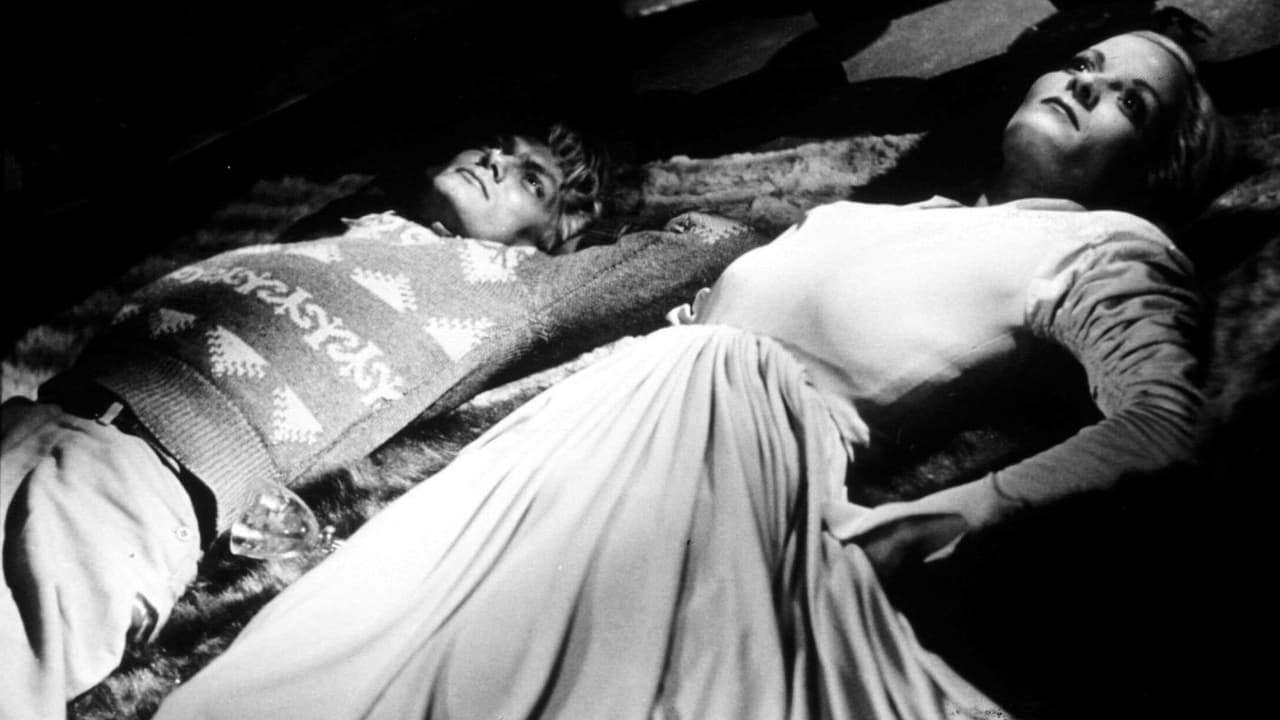
The Eternal Return (1943)
In 1940s France, a man finds a wife for his uncle, but ends up falling in love with her himself when he drinks a love potion.
What people think about The Eternal Return
The Eternal Return feels like a love story told in moonlight—poetic, hushed, and strangely timeless, even as it’s rooted in 1940s France. Jean Cocteau’s script gives the Tristan and Isolde legend a sophisticated, dreamlike clarity, while Jean Delannoy’s direction lets romance bloom with an aching, classical inevitability rather than melodrama. The performances carry that spell with a kind of doomed tenderness, making every glance and pause feel fated. If you’re looking for brisk plot mechanics or modern irony, this may feel deliberately old-world, but if you want a beautiful film that treats love like a myth you can still believe in, it’s hard to resist.
The Eternal Return is clearly aiming for sweeping, doomed romance by transplanting Tristan and Isolde into wartime France, with a stylized, poetic mood that wants to feel timeless. The problem is it often plays more like a museum piece: the pacing is slow, the melodrama can land as cliché today, and if you’re relying on subtitles, the quality can make an already languid film feel even more distant. It also carries a controversial wartime sheen—an “Aryan” beauty ideal and an atmosphere that some viewers read as uncomfortable propaganda-adjacent, even if you’re primarily there for the love story. If you enjoy vintage, deliberately mannered cinema and can meet it on its own terms, there’s an eerie elegance here; if you want emotional immediacy, modern sensibilities, or clean translation, this may test your patience.
Cast






Crew
- Director
- Jean Delannoy
- Writers
- Jean Cocteau
- Producers
- André Paulvé
- Cinematography
- Roger Hubert
- Editing
- Suzette Fauvel
Details
- Released
- December 13, 1943
- Language
- French
- Studio
- Films André Paulvé
- IMDb
- tt0036566