
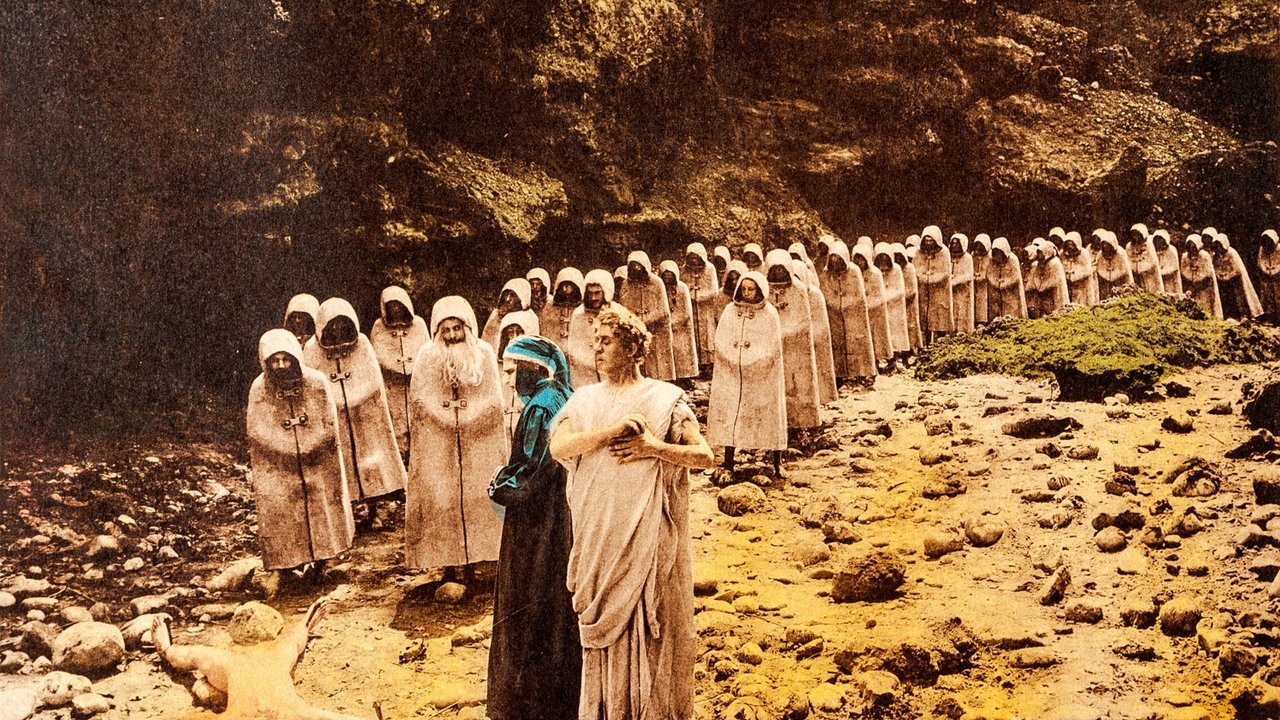
Dante's Inferno (1911)
The classic tale of Dante's journey through hell, loosely adapted from the Divine Comedy and inspired by the illustrations of Gustav Doré. This historically important film stands as the first feature from Italy and the oldest fully-surviving feature in the world, and boasts beautiful sets and special effects that stand above other cinema of the era.
What people think about Dante's Inferno
Dante’s Inferno (1911) is one of those rare silent films that doesn’t feel like a museum piece so much as a portal—an audacious, nightmare-lit plunge into imagination that still startles more than a century later. Inspired by Gustave Doré’s engravings, it turns Dante’s journey into a procession of haunting tableaus, where practical effects, monumental sets, and stark composition conjure Hell with a clarity that’s both beautiful and unsettling. The tone is solemn, operatic, and genuinely horrific at points, less “spooky fun” than a grand moral fever dream rendered with surprising cinematic confidence for its era. It’s not for everyone—there’s frequent nonsexual nudity and some disturbing imagery of torture and violence—but if you can meet it on its own terms, you’ll see why this historically pivotal feature still feels like a bold act of visual storytelling.
Dante’s Inferno (1911) is clearly trying to bring the Divine Comedy to life as a grand, painterly nightmare, and as a piece of film history it’s genuinely impressive—those Doré-inspired sets and practical effects still have bite. But don’t go in expecting character depth or an emotional through-line; it plays more like a procession of iconic tableaus than a story that builds and lands. The imagery is often stark and confrontational (including frequent nonsexual nudity and scenes of torment), so it can feel more like an art museum of suffering than “horror entertainment.” If you love silent cinema, early special effects, or literary adaptations, it’s worth your time; if you need strong drama, modern pacing, or a clear emotional hook, this will likely feel cold and distant.
Cast
Crew
- Cinematography
- Emilio Roncarolo
Details
- Released
- March 1, 1911
- Language
- Italian
- Studio
- Milano Films
- IMDb
- tt0002130