
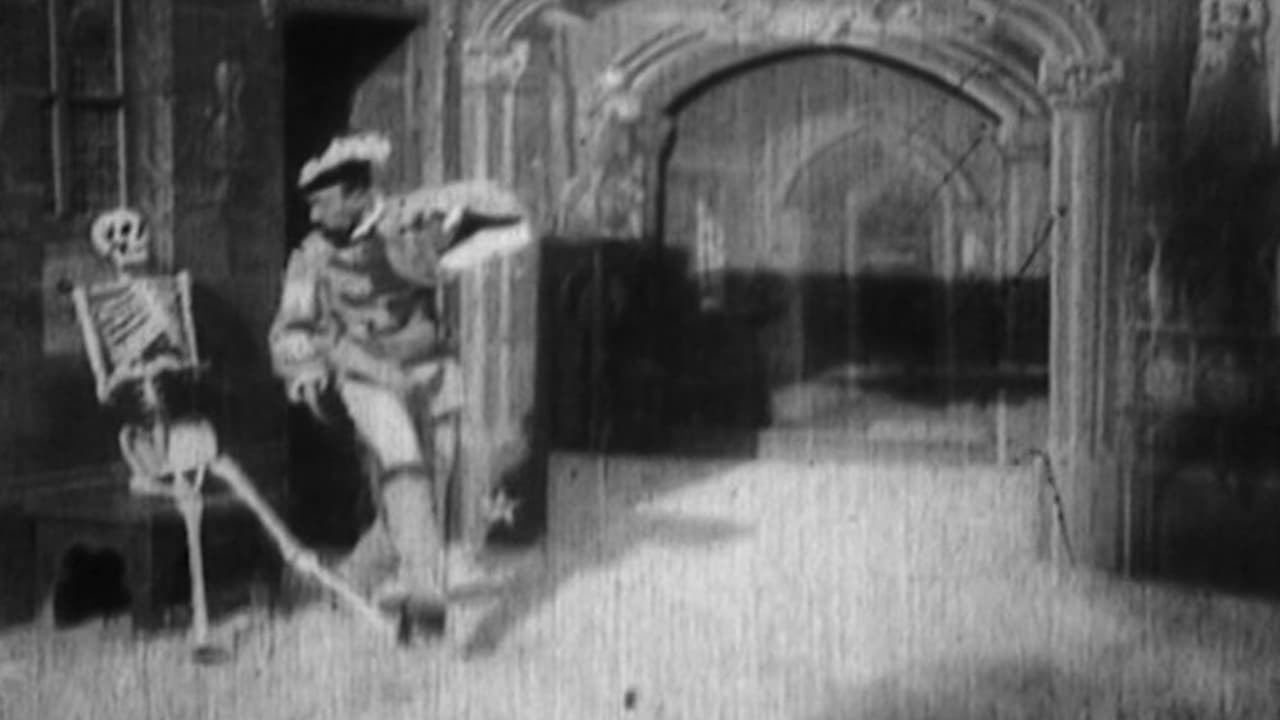
Le manoir du diable (1896)
In a medieval castle, a dark magician thought to be Mephistopheles conjures up a series of bizarre creatures and events in order to torment a pair of interloping cavaliers.
What people think about Le manoir du diable
What makes Le manoir du diable special isn’t suspense in the modern sense, but the sheer joy of watching cinema learn to dream in real time: Georges Méliès turns a bare stage into a playground of vanishings, transformations, and impish visual jokes that still feel like magic tricks performed right in your living room. In just a few brisk minutes, it conjures a gothic, storybook vibe—more mischievous than terrifying—where bats become devils, furniture rebels, and reality keeps slipping on a banana peel. You can feel the director’s showman’s grin in every cut and substitution, a reminder that “special effects” began as pure imagination and timing. If you need deep characters or genuine scares, this won’t be your haunt, but if you’re even slightly curious about where screen fantasy and horror were born, it’s a delightful, historically electric little spell.
Le manoir du diable is clearly trying to be a playful, stage-magic “haunted castle” romp, showing off Georges Méliès’ early trick photography with demons, skeletons, and rapid-fire transformations. If you’re expecting modern horror—tension, scares, character depth, or even a coherent story rhythm—you’ll likely be bored, because it’s essentially a short visual gag reel with theatrical pantomime. The age shows: the pacing is abrupt, the acting is broad, and the effects are charming rather than frightening. But if you have patience for silent-era cinema and want a quick, historically important peek at where screen fantasy began, it’s a neat little time capsule that’s best enjoyed as a curiosity, not a thrill ride.
Cast


Crew
- Director
- Georges Méliès
- Writers
- Georges Méliès
- Producers
- Georges Méliès
Details
- Released
- December 24, 1896
- Language
- French
- Studio
- Star Film
- IMDb
- tt0000091