
Interprétation
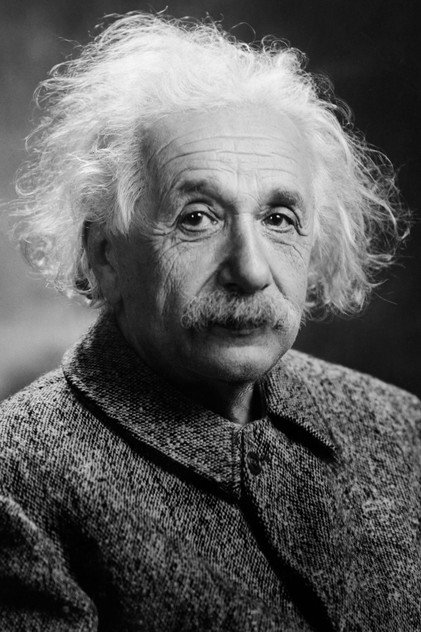
Albert Einstein
- Naissance
- 14 mars 1879
- Décès
- 18 avril 1955
- Origine
- Ulm, Kingdom of Württemberg, German Empire [now Germany]
Albert Einstein (14 March 1879 – 18 April 1955) was a German-born theoretical physicist who developed the theory of relativity, one of the two pillars of modern physics (alongside quantum mechanics). His work is also known for its influence on the philosophy of science. He is best known to the general public for his mass–energy equivalence formula E = mc2, which has been dubbed "the world's most famous equation". He received the 1921 Nobel Prize in Physics "for his services to theoretical physics, and especially for his discovery of the law of the photoelectric effect", a pivotal step in the development of quantum theory.
Afficher plusAfficher moins
From Wikipedia, the free encyclopedia
Biographie fournie par TMDB
Interprétation 16
 À l’étudeOrwell: 2+2=52025
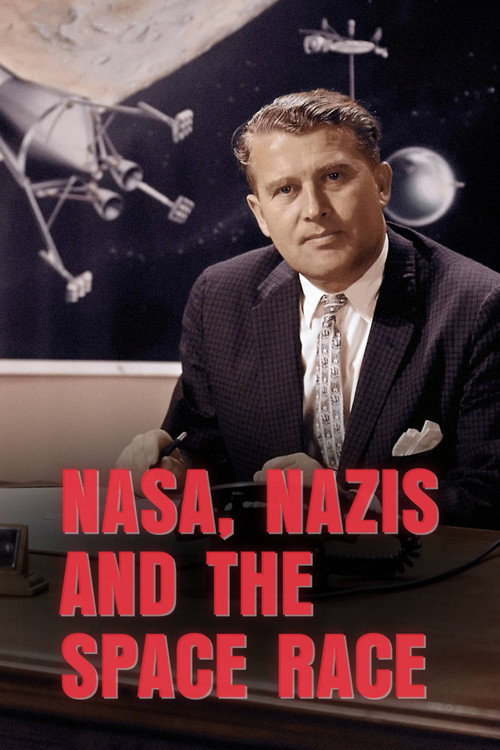 À l’étudeLes nazis de la Nasa2025
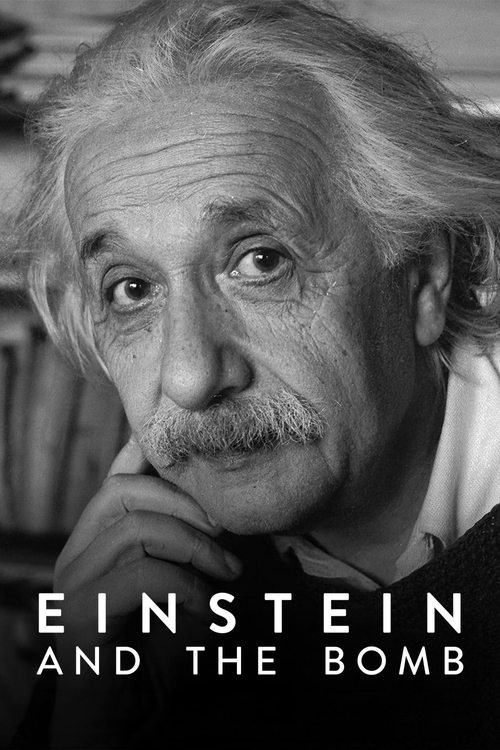 À l’étudeEinstein and the Bomb2024
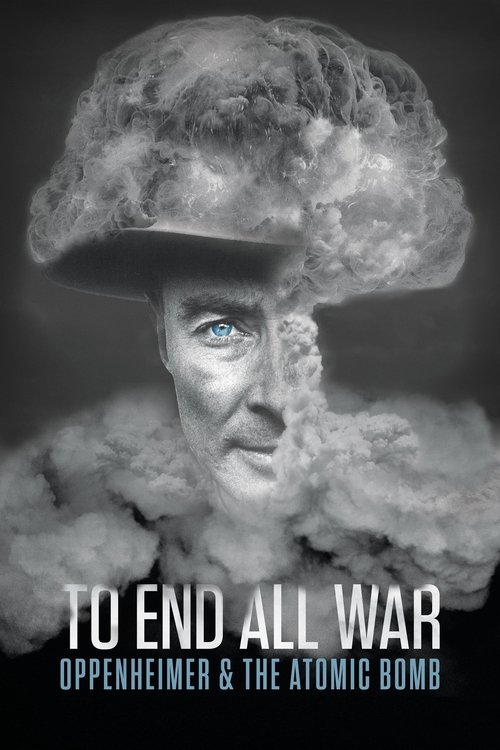 Oppenheimer, l'homme et la bombe2023
 À l’étudeDeux bombes pour une espionne2015
 La Science d'Interstellar2014
 À l’étudeSecrets of the Universe: Great Scientists in Their Own Words2014
 À l’étudeStar Trek : Secrets of the Universe2013
 À l’étudeThe Nazi Gospels2012
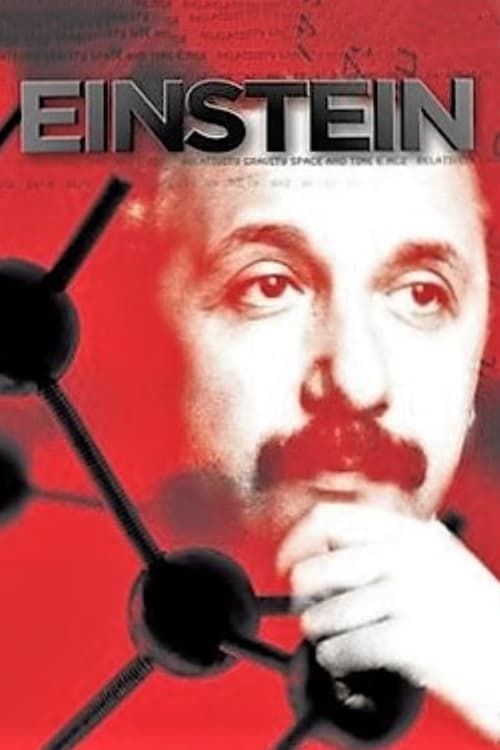 À l’étudeEinstein2008
 À l’étudeNaqoyqatsi2002
 À l’étudeTrinity and Beyond: The Atomic Bomb Movie1995
 À l’étudeHitler - Eine Karriere1977
 À l’étudeSwastika1974
 À l’étudeAnd Still I Believe1974
 À l’étudeChampagne for Caesar1950